
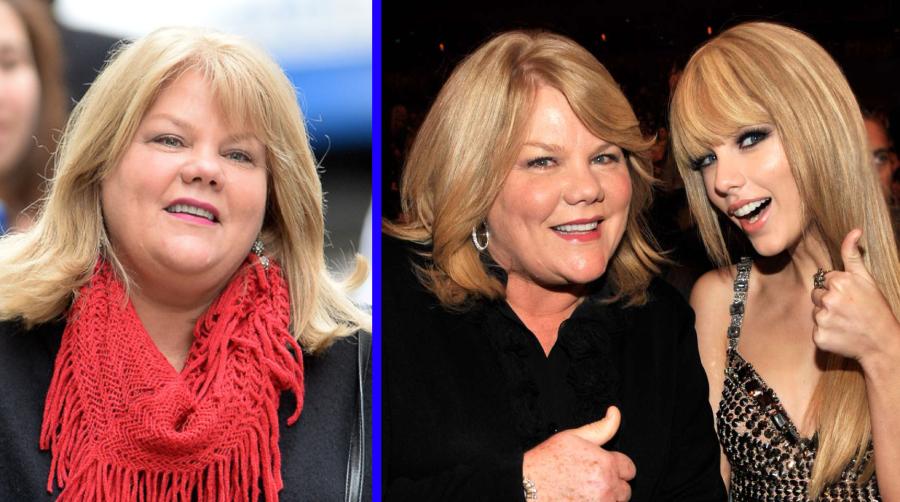
Andrea Swift did not sell out stadiums or break streaming records, but without her, the person who did might never have gotten the chance. She is one of those rare figures who shaped an era of music entirely from the background — no microphone, no spotlight, no Grammy on her mantle — just an unshakable belief in her daughter and the kind of quiet strength that does not make headlines but absolutely makes history. Most people who know Taylor Swift’s story have heard the name, but very few know the full picture of who Andrea Gardner Swift actually is, where she came from, and what she has been through. This article is for those people. It goes beyond the concert footage and the red carpet appearances to tell the real story of a woman who gave up her own professional life to invest entirely in someone else’s dream — and helped turn that dream into the biggest music career of the 21st century.
Who Is Andrea Swift? A Closer Look at the Woman Behind the Name
Andrea Gardner Swift, born on January 10, 1958, in Pennsylvania, is the mother of two — Taylor Alison Swift and Austin Swift — and one of the most quietly influential figures in the modern music industry. She spent her professional life in marketing and mutual fund communications before stepping away entirely to support her daughter’s rapidly growing career in country music. What makes Andrea particularly interesting is that she is not the stereotypical pushy showbiz parent. Everyone who has observed her up close, from industry insiders to fans who have interacted with her at shows, consistently describes her as grounded, warm, direct, and fiercely protective. She does not seek attention. She redirects it — always back toward the people and things she loves.
Taylor herself has described her mother using language that sounds more like a business partner than just a parent: calculated, logical, business-minded, kind but very direct. That combination of emotional warmth and strategic clarity is not something you stumble into. It is the product of a specific upbringing, a specific set of experiences, and a specific family — the Finlay family — that gave Andrea her foundation long before she ever became a Swift.
The Finlay Family: The Roots That Shaped Andrea Gardner Swift
To understand Andrea Gardner Swift, you have to go back one generation to the family she was born into. Her mother, Marjorie Finlay, was not just any woman — she was a trained opera singer with a voice that left a mark on everyone who heard it. Marjorie’s talent was not a hobby or a parlor trick. It was a genuine artistic gift, and it shaped the culture of the household Andrea grew up in. Music was not background noise in that family. It was a living, breathing presence that informed how the Finlays communicated, celebrated, and experienced the world.
Her father, Robert Bruce Finlay, came from a different corner of the professional world entirely. He was an engineer who worked extensively throughout Southeast Asia, which is why Andrea spent a meaningful portion of her early childhood growing up in Singapore. That international upbringing gave her a perspective that most kids from small American towns simply do not have. She learned adaptability early. She understood that life does not always look the way you expect it to, and that the ability to adjust without losing your sense of self is one of the most valuable things a person can develop.
When the family eventually returned to the United States, Andrea settled in Texas. She attended Memorial High School in Houston and went on to complete her degree at the University of Houston. It was a path that blended the creative inheritance of Marjorie Finlay with the disciplined, practical mindset of Robert Bruce Finlay — and that combination would define Andrea’s approach to everything that followed.
Marjorie Finlay’s Influence on Three Generations of Women
It would be a genuine oversight to talk about Andrea Swift’s family without spending real time on Marjorie Finlay, because her influence did not stop with Andrea. It flowed directly into Taylor Swift in ways that shaped not just her talent but her identity as an artist. Taylor has spoken openly about how her grandmother’s singing in church was one of her earliest memories tied to music — a sound that lodged itself somewhere deep and never left.
Marjorie Finlay passed away, and her loss hit the family hard. But Taylor processed that grief the way she processes most things — through songwriting. The result was “Marjorie,” a song from her 2020 album Evermore that stands among the most emotionally precise things Taylor has ever written. It is a letter to a woman who believed in her granddaughter before the world had any reason to. It pulls from specific memories, specific words of encouragement, and a specific feeling of being truly seen by someone who is no longer there. The song connects three generations of women — Marjorie Finlay, Andrea Gardner Swift, and Taylor Alison Swift — in a single piece of music that feels both deeply personal and universally human.
That is the legacy Marjorie left behind: not just musical talent, but the belief that creativity is worth fighting for, worth passing down, worth honoring even after someone is gone.
Andrea’s Professional Life Before Taylor’s Career Took Off
Before the world knew her as Mama Swift, Andrea Gardner Swift was building a real career of her own. She worked as a marketing manager at an advertising agency and later moved into the world of mutual fund marketing, where she operated as an executive. These were not entry-level positions. She was a sharp professional who understood how to build and protect a brand, how to communicate value, and how to read a room — skills that would turn out to be extraordinarily useful once her daughter started knocking on Nashville’s doors.
What is often glossed over in the Taylor Swift origin story is just how much of the early strategic legwork was Andrea’s doing. When Taylor began pursuing music seriously, it was Andrea who accompanied her on the early trips to Nashville, who sat in the meetings, who managed the relationships. She was not just a chaperone. She was effectively a first manager, operating on instinct, maternal protectiveness, and a genuine understanding of how marketing and positioning work in a competitive industry. She sacrificed a stable, successful career not because she had to but because she chose to — because she believed in her daughter with a certainty that was not blind optimism but informed conviction.
Scott and Andrea Swift: Building a Family That Stayed Together Through Everything
Andrea met Scott Kingsley Swift, a stockbroker and vice president at Merrill Lynch, and the two married on February 20, 1988, in Houston, Texas. Scott came from Bryn Mawr, Pennsylvania, and brought his own brand of financial discipline and analytical thinking to the partnership. Together, they created a household that valued hard work, clear thinking, and showing up — values that both Taylor Alison Swift and Austin Swift have carried into their adult lives in very visible ways.
The family’s decision to relocate from Pennsylvania to Nashville when Taylor was fourteen is one of the most consequential moves in modern music history, even if nobody knew it at the time. Taylor had just become the youngest artist ever signed to Sony/ATV Publishing, and Nashville was the logical next step. But Andrea and Scott did not move the family into the heart of the music scene. They settled in Hendersonville, a suburb about twenty miles outside of Nashville, specifically to give Taylor space to develop without being constantly surrounded by industry pressure. That was not an accident. That was a parenting decision made with clarity and care, and it helped Taylor build the kind of grounded identity that has sustained her through decades of extraordinary public scrutiny.
Reports from around 2012 indicated that Andrea and Scott had separated after roughly twenty-four years of marriage. Whatever happened privately between them, what has remained visible publicly is a co-parenting relationship built on mutual respect and shared love for their children. They continue to appear together at Taylor’s concerts, award shows, and family events — a quiet testament to the kind of people they both are.
Raising Taylor Alison Swift: The Real Story
Taylor Alison Swift was born on December 13, 1989, and from a very early age it was clear she was not wired like most kids. She wanted to perform. She wanted to write. She had an energy and a specificity of ambition that most nine-year-olds do not possess. Andrea saw it, took it seriously, and built her entire post-corporate life around nurturing it.
The early Nashville trips were not glamorous. Taylor and Andrea made the journey when Taylor was just eleven, carrying demo tapes of karaoke covers, and got turned away by every single label they visited. That kind of rejection could have ended the whole thing before it began. But Andrea did not frame it as failure. She helped Taylor reframe it as redirection — toward songwriting, toward developing a voice that was genuinely hers rather than a replica of someone else’s. That shift in focus turned out to be the defining decision of Taylor’s career. The girl who got turned away from every label became the woman who eventually owned her masters, re-recorded her albums on her own terms, and became the highest-grossing touring artist in history.
Andrea was at every step of that journey. Not as a passive observer but as an active participant — attending shows in tiny venues, building relationships with industry people, advocating fiercely for her daughter’s creative vision. Taylor has never been shy about crediting her mother as one of the primary reasons any of this happened.
Austin Swift: The Other Swift That Andrea Raised
Andrea Swift is not only Taylor’s mother. She is also the mother of Austin Swift, born on March 11, 1992. Austin has built his own career in the entertainment industry as an actor and producer, and he plays an active role in managing aspects of Taylor’s film-related work. He has appeared in several of Taylor’s music videos and maintains a warm, if somewhat lower-profile, public presence compared to his sister.
Austin Swift shows up in the family’s public life in ways that feel genuinely unforced — whether he is appearing in a Santa suit at a Chiefs game or supporting his sister at major career milestones. He is clearly a product of the same household that produced Taylor: loyal, grounded, creative, and deeply family-oriented. Andrea raised two children who, despite growing up in very different versions of fame and public attention, both carry a similar sense of identity and belonging. That does not happen by accident. That is the product of intentional, present, deeply engaged parenting — the kind Andrea Swift has been practicing since before Taylor sang her first note in public.
Andrea Swift’s Cancer Diagnosis: Strength in the Face of the Unthinkable
In April 2015, Andrea Swift was diagnosed with cancer. Taylor shared the news publicly, though she deliberately kept the specific type of cancer private — a boundary that felt unmistakably like Andrea’s influence, protecting her own story even as it became part of the public conversation. Andrea underwent treatment, and her cancer went into remission. For a time, it seemed like the chapter had closed.
It had not. In her 2019 personal essay for Elle magazine, Taylor revealed that her mother’s cancer had returned. Then, in a 2020 interview with Variety, Taylor disclosed something even more difficult — that while Andrea was undergoing chemotherapy for cancer, doctors had also discovered a brain tumor. Taylor described the experience of watching her mother navigate a brain tumor diagnosis as completely unlike anything the family had faced before: “The symptoms of what a person goes through when they have a brain tumor is nothing like what we’ve ever been through with her cancer before. So it’s just been a really hard time for us as a family.”
The emotional toll of these diagnoses on Taylor is most viscerally felt in the song “Soon You’ll Get Better,” a collaboration with The Chicks from the 2019 album Lover. The track is stripped-down, aching, and almost unbearably honest. Taylor has said she can barely listen to it. Writing it was cathartic but painful — a way of processing something she could not fix, could not control, and could not negotiate with the way she could negotiate a record deal or a streaming contract. Andrea’s health journey gave the world one of Taylor’s most emotionally unguarded pieces of music, and in doing so, it also reminded everyone who Mama Swift really is: not a supporting character in someone else’s story, but a full human being with her own fight to fight.
Andrea Swift Today: Still Showing Up
Whatever Andrea Swift has been through — the cancer diagnoses, the family transitions, the decades of operating in the shadow of one of the most scrutinized careers in entertainment — she has never stopped showing up. She is a regular presence at Taylor’s Eras Tour shows, frequently photographed in the crowd or backstage, often greeting fans with the kind of warmth that feels less like a celebrity’s mother performing graciousness and more like a genuinely kind person who happens to be in an extraordinary situation.
She has embraced Taylor’s relationship with Kansas City Chiefs tight end Travis Kelce with evident enthusiasm, attending multiple Chiefs games alongside Scott Swift and being photographed alongside Travis’s father, Ed Kelce. When the entire Swift family — Andrea, Scott, Austin, and Taylor — gathered to watch the Chiefs defeat the Buffalo Bills in the 2025 AFC Championship game, it was a reminder of something easy to forget in the noise of everything else: this is a close, loving, functional family, and Andrea is at the center of it.
How Taylor’s Songs Paint a Portrait of Andrea Swift
The most honest portrait of Andrea Gardner Swift does not come from interviews or magazine profiles. It comes from her daughter’s music. “The Best Day,” written when Taylor was a teenager and released on the Fearless album in 2008, is a direct love letter to Andrea — a collection of specific, tender childhood memories that reads like a thank-you note from a daughter who understood even then that she had been given something rare. Taylor made the accompanying video using home footage, a gesture of intimacy that still resonates with fans more than fifteen years later.
Then there is “Soon You’ll Get Better,” which does something almost no Taylor Swift song does: it leaves the wound open. There is no resolution. There is no chorus that pivots toward strength or survival. There is just love, fear, and the particular helplessness of watching a parent suffer. And there is “Marjorie,” which ties Andrea’s story to Marjorie Finlay’s story and traces the through-line of strength, creativity, and belief that has passed from grandmother to mother to daughter across three generations.
These songs are Andrea Swift’s truest biography. They are what she has meant, what she has sacrificed, and what she has given — written in the handwriting of the daughter she raised to say it better than anyone else could.
FAQs
Who exactly is Andrea Gardner Swift?
Andrea Gardner Swift is the mother of Taylor Swift and Austin Swift, born on January 10, 1958, in Pennsylvania. She is a former marketing executive who stepped away from her career to support and help manage Taylor’s early music career in Nashville.
Who are Marjorie Finlay and Robert Bruce Finlay?
Marjorie Finlay was Andrea Swift’s mother and Taylor Swift’s maternal grandmother — a trained opera singer whose love of music has influenced three generations of women. Robert Bruce Finlay was Andrea’s father, an engineer who worked throughout Southeast Asia, leading the family to spend time in Singapore during Andrea’s childhood.
What type of cancer did Andrea Swift have?
Andrea Swift’s specific cancer type has never been publicly disclosed, as the family has kept that detail private. What is known is that she was first diagnosed in 2015, went into remission, then faced a recurrence, and was later also diagnosed with a brain tumor discovered during chemotherapy.
What songs did Taylor write about Andrea Swift?
Taylor Swift has written several songs that reference or are directly inspired by her mother, most notably “The Best Day” from Fearless, “Soon You’ll Get Better” from Lover, and “Marjorie” from Evermore, which also honors Andrea’s mother, Marjorie Finlay.
Are Andrea Swift and Scott Swift still together?
Andrea and Scott Swift reportedly separated around 2012 after more than two decades of marriage. However, they remain co-parents and are regularly seen together at Taylor’s concerts, family events, and sporting occasions, maintaining a visibly warm relationship for the sake of their family.
Conclusion
Andrea Swift is proof that the most important stories in music are not always the ones told from the stage. She grew up shaped by the artistry of Marjorie Finlay and the discipline of Robert Bruce Finlay, built a professional identity of her own, walked away from it to invest everything in someone she believed in, and quietly helped build one of the most successful music careers in history. She did all of this while fighting cancer, navigating family transitions, and showing up — always, consistently, without fanfare — for her daughter and her son. Andrea Gardner Swift is not a footnote in Taylor Alison Swift’s story. She is a chapter of her own — one of the most important ones. And if Taylor’s music has taught the world anything over the past two decades, it is that the people who love you quietly and constantly are the ones who deserve to be written about the loudest.