
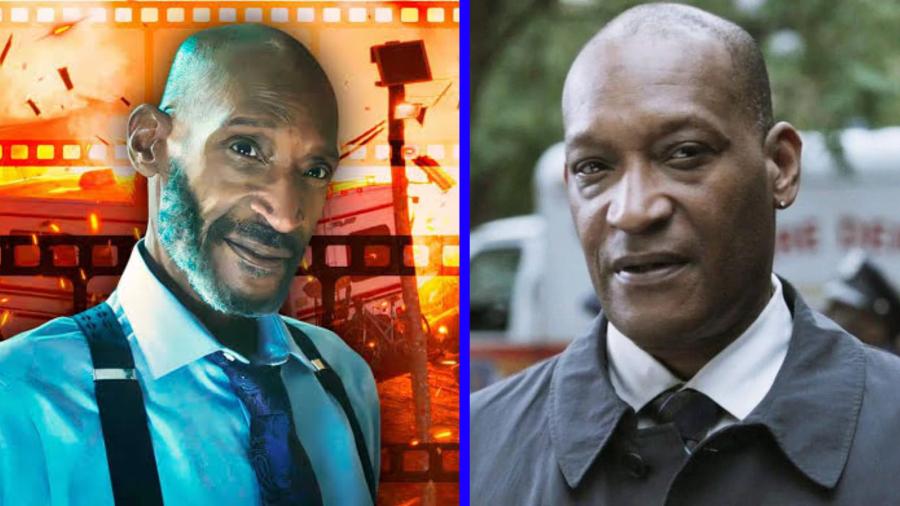
William Bludworth is, without question, one of the most fascinating supporting characters to come out of the horror genre. He doesn’t get much screen time, and he doesn’t have a flashy kill scene or a dramatic arc in the traditional sense. Yet decades after the first Final Destination film hit theaters, fans are still arguing about who, or what, this man actually is. That’s a rare feat for a supporting character, and it says a lot about how well the role was written and performed.
If you’ve watched any of the Final Destination movies, you already know the basic setup: a group of young people cheat death after one of them gets a premonition of a disaster, and Death itself returns to collect what it’s owed, in increasingly elaborate and gruesome ways. Amid all that chaos, Bludworth shows up as the calm, eerie voice of reason, usually working out of a funeral home and dropping cryptic hints about how Death’s “design” works. He’s not a hero, not a villain, and not quite a victim either. He occupies a strange middle ground that makes him impossible to pin down, and that ambiguity is exactly why he’s stuck with audiences for so long.
Who Is William Bludworth in the Final Destination Series
At his core, Bludworth is presented as a mortician, which already gives him a natural, almost poetic connection to the franchise’s central theme. Who better to understand the mechanics of death than someone who handles bodies for a living? He first appears in the original 2000 film, working at a funeral home that the main characters stumble into, and right away there’s something off about him. He seems to know more than he should. He talks about Death as though it were a living, thinking entity with rules and patterns, not just a random force of nature. That single appearance was enough to plant a seed of mystery the franchise kept watering for years.
What makes him such an effective character is that the films never spell out exactly how he knows what he knows. There are implications, sure, little breadcrumbs dropped here and there, but nothing is ever confirmed outright. That restraint is impressive for a horror franchise that isn’t always known for subtlety. Most slasher-adjacent series love to over-explain their mythology until it collapses under its own weight, but Bludworth’s mystery is handled with surprising discipline.
Tony Todd’s Performance Made the Character Unforgettable
It’s impossible to talk about William Bludworth without talking about Tony Todd, the actor who brought him to life. Todd had an incredible, gravelly voice and a commanding screen presence that made even his smallest scenes feel weighty. He was already a horror icon thanks to his role as Candyman, and he brought that same gravity and menace to Bludworth, just dialed into a different register. Where Candyman was tragic and vengeful, Bludworth was more like a weary observer, someone who had seen things he couldn’t fully explain and had made an uneasy peace with that.
Todd’s delivery turned what could have been a throwaway exposition character into something genuinely memorable. He had a way of pausing before key lines, letting silence do half the work, which made every scene with him feel a little heavier than it needed to be on paper. Fans often cite his monologues as some of the best moments in the entire franchise, not because of flashy effects or jump scares, but purely because of how he sold the dialogue. Sadly, Todd passed away in November 2024, and his final appearance as Bludworth in Final Destination Bloodlines became something of an emotional send-off, both for the character and for the actor himself.
Theories About What Bludworth Actually Is
This is where things get genuinely fun for longtime fans. Since the films never fully explain Bludworth’s nature, the fan community has spent years building its own theories, and a few of them are pretty compelling. One popular idea is that Bludworth himself cheated death at some point in the past, possibly tied to the brief mention of surviving an explosion back in 1969, and that this experience gave him a kind of insider knowledge about how Death’s design actually functions.
Another theory leans more supernatural, suggesting that Bludworth isn’t quite human at all anymore, or maybe never fully was to begin with. Under this reading, he’s something closer to a herald or agent of Death, someone who exists specifically to interact with people who’ve slipped through the cracks of fate. He shows up right when characters need guidance, disappears just as mysteriously, and seems to operate on a different timeline than everyone else. There’s no hard evidence for this in the films, but the vibe certainly supports it.
A third, more grounded theory treats him simply as an extremely perceptive man who has spent his career around death and has pieced together patterns most people would never notice. This version is less flashy but arguably more in line with how horror fiction often works, where the scariest thing isn’t a monster but a regular person who understands something the rest of us are too afraid to look at directly.
Bludworth’s Role Across the Different Films
Bludworth doesn’t appear in every entry of the franchise, which actually works in his favor. His scarcity makes each appearance feel more significant rather than diluting the character through overexposure. In the films where he does show up, his role generally follows a similar pattern: he meets the surviving characters, drops a chilling piece of wisdom about Death’s intentions, and steps back into the shadows, letting the story unfold without him directly interfering.
This pattern might sound repetitive on paper, but in practice it works because each film tweaks the context just enough to keep things fresh. Sometimes he’s reactive, offering information after tragedy has already struck. Other times he’s almost proactive, nudging characters toward decisions before things spiral further out of control. Either way, he never fully tips his hand about what he is or how much control he actually has over events. That consistency, paired with subtle variation, is part of what makes him such a well-constructed recurring figure rather than a gimmick that overstays its welcome.
Why Bludworth Resonates So Strongly With Fans
There’s something deeply human about the appeal of a character like Bludworth, even though his exact nature might not be human at all. Horror fans tend to gravitate toward figures who seem to understand the unexplainable, because that understanding offers a strange kind of comfort even within a terrifying story. Bludworth represents the idea that maybe there’s some logic behind the chaos, some pattern hiding beneath all the random, brutal deaths that define the franchise.
He also taps into a classic storytelling archetype, the wise stranger who knows more than the protagonists but withholds full disclosure, forcing the audience to lean in and pay closer attention. That kind of restraint is rare in modern horror, where exposition often gets dumped on viewers in long, clunky monologues. Bludworth’s lines are short, deliberate, and loaded with implication rather than explanation, which respects the audience’s intelligence and keeps the mystery alive long after the credits roll.
Final Destination Bloodlines and Bludworth’s Legacy
Final Destination Bloodlines marked a significant moment for the franchise, partly because it served as Tony Todd’s last performance in the role before his passing. Rather than treating his appearance as just another cameo, the film leaned into the emotional weight of the moment, giving Bludworth scenes that feel like both a continuation of his established mystery and a quiet farewell to the character and the man who played him. For longtime fans, this added a layer of real-world poignancy that the franchise had never quite had before.
Beyond the emotional resonance, Bloodlines also reinforces just how central Bludworth has become to the franchise’s identity, even with his limited screen time across the series. He’s become shorthand for the deeper mythology of Final Destination, the closest thing the franchise has to a guide figure who connects otherwise disconnected stories spread across different decades and different casts of characters. His legacy isn’t built on frequency of appearances but on the consistent quality and impact of the moments he’s given.
FAQs
Who plays William Bludworth in the Final Destination films?
William Bludworth is played by Tony Todd, who reprised the role across multiple entries in the franchise until his passing in November 2024.
Is William Bludworth a villain in the Final Destination series?
No, he’s not portrayed as a villain; he functions more as a mysterious guide who offers warnings and insight into how Death’s design works.
Did William Bludworth cheat death himself?
The films hint at this through a mentioned 1969 explosion he survived, but it’s never explicitly confirmed, leaving it open to interpretation.
Does William Bludworth appear in every Final Destination movie?
No, he appears in select entries of the franchise rather than all of them, which helps keep each appearance feel meaningful.
What happens to William Bludworth in Final Destination Bloodlines?
Bloodlines serves as his final appearance in the franchise, doubling as a tribute to both the character and actor Tony Todd.
Conclusion
William Bludworth might not be the loudest or most action-packed character in horror history, but he’s certainly one of the most quietly effective. Through a mix of careful writing and Tony Todd’s unforgettable performance, he became the beating heart of the Final Destination franchise’s mythology, a figure who said just enough to keep audiences hooked without ever giving the whole game away. As the series moves forward without Todd, Bludworth’s legacy remains firmly intact, a reminder that sometimes the most haunting characters are the ones who leave the most unsaid.