
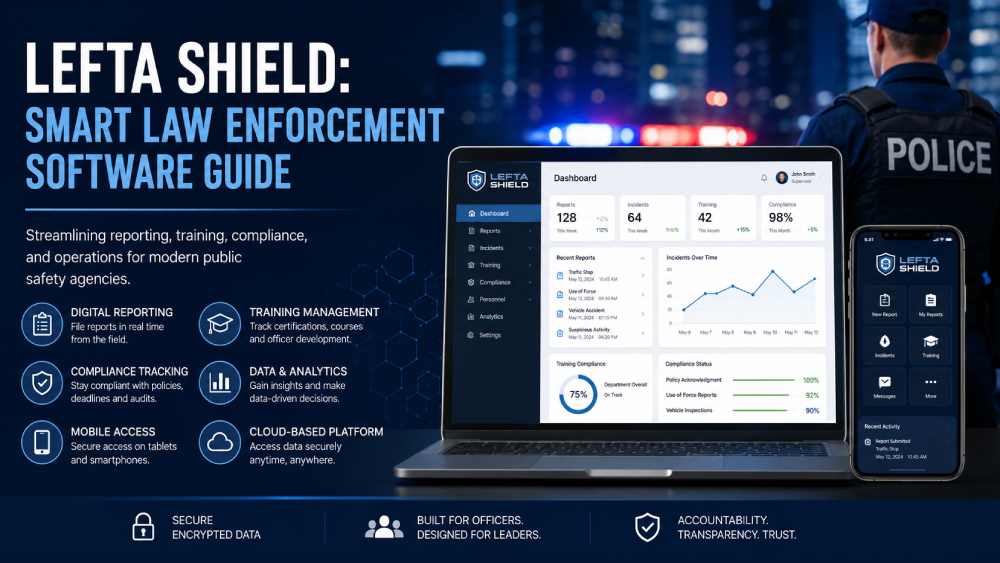
Technology has transformed nearly every industry, and law enforcement is no exception. Police departments and public safety organizations now rely heavily on digital systems to improve efficiency, accountability, and communication. One platform that has gained attention in this space is Lefta Shield. Designed specifically for law enforcement agencies, Lefta Shield helps departments manage reports, officer training, compliance tracking, and operational workflows in a centralized environment.
The platform was developed to replace outdated paperwork and disconnected systems that often slowed down investigations and administrative tasks. Instead of juggling multiple databases and manual forms, agencies can use Lefta Shield to streamline daily operations through a secure cloud-based system. This has become increasingly important as departments face growing expectations for transparency, data accuracy, and faster response times.
What makes Lefta Shield stand out is its focus on both operational efficiency and officer accountability. It is not simply a reporting tool; it is a complete ecosystem built to support agencies in managing modern policing requirements. From field reporting to compliance documentation, the platform aims to reduce administrative burdens while improving the quality of data collection.
What Is Lefta Shield?
Lefta Shield is a digital law enforcement management platform developed by LEFTA Systems. The software is designed to assist police departments, sheriff’s offices, and other public safety agencies with incident reporting, training management, compliance monitoring, and investigative documentation.
At its core, the platform serves as a centralized hub where officers and administrators can access critical operational tools. Instead of relying on paper reports or disconnected software applications, agencies can manage everything from one secure platform. This helps improve consistency across departments and reduces the risk of missing or inaccurate records.
The system is cloud-based, which means authorized personnel can securely access information from different locations. Officers in the field can submit reports directly from mobile devices, while supervisors can review documentation in real time. This level of accessibility is especially valuable in situations where speed and accuracy are essential.
Another important aspect of Lefta Shield is its adaptability. Different agencies have different policies and operational requirements, and the platform allows departments to customize workflows according to their specific needs. This flexibility makes it useful for agencies of varying sizes.
Key Features of Lefta Shield
One reason Lefta Shield has become popular among public safety organizations is the wide range of features it offers. The platform combines multiple functions into one system, reducing the need for separate software tools.
Incident and Field Reporting
The reporting feature allows officers to create and submit reports digitally while in the field. This eliminates delays caused by manual paperwork and helps departments maintain accurate records. Reports can include incident details, statements, evidence notes, and other important documentation.
Real-time reporting also improves communication between officers and supervisors. Administrators can review submissions quickly, request corrections if necessary, and maintain better oversight of active cases.
Compliance Tracking
Modern law enforcement agencies are expected to follow strict policies and reporting standards. Lefta Shield includes compliance management tools that help departments track required documentation and maintain accountability.
This is especially important for use-of-force reports, investigative procedures, and regulatory compliance requirements. Automated tracking reduces the risk of missed deadlines or incomplete records.
Officer Training Management
Training is a critical part of law enforcement operations, and Lefta Shield includes tools for tracking officer certifications, completed courses, and training schedules. Departments can monitor compliance with mandatory training programs and identify officers who need updated certifications.
This feature simplifies administrative work while helping agencies maintain professional standards. Instead of manually reviewing spreadsheets or paper records, supervisors can access training data instantly.
Mobile Accessibility
One of the platform’s strongest advantages is mobile functionality. Officers can use tablets or smartphones to access the system while on patrol. This allows them to submit information directly from the field without returning to the station.
Mobile access improves efficiency and reduces downtime. It also helps ensure that reports are completed while details are still fresh, improving accuracy.
Data Analytics and Oversight
Lefta Shield provides analytical tools that help agencies monitor trends, officer activity, and operational performance. Supervisors can review data to identify patterns, evaluate department performance, and improve decision-making.
These analytics can also support transparency initiatives by providing detailed reporting metrics that agencies may need for internal reviews or public accountability.
How Lefta Shield Improves Law Enforcement Operations
Law enforcement agencies often struggle with outdated systems that create delays and inefficiencies. Lefta Shield addresses these challenges by simplifying workflows and reducing administrative burdens.
One major improvement is the reduction of paperwork. Traditional reporting methods often involve multiple forms, manual approvals, and repetitive data entry. By digitizing these processes, the platform allows officers to spend less time on administrative tasks and more time focusing on field operations.
Another benefit is improved communication. Since reports and updates are stored in a centralized system, supervisors and investigators can access information quickly. This reduces confusion and improves coordination across departments.
Accuracy is another important factor. Digital forms can include validation checks that reduce errors and incomplete submissions. This improves record quality and helps departments maintain reliable documentation.
The platform also enhances accountability. With automated tracking and centralized records, agencies can monitor compliance more effectively and ensure that procedures are followed correctly.
The Role of Cloud Technology in Lefta Shield
Cloud technology plays a major role in the functionality of Lefta Shield. Instead of storing data on local servers, the system uses secure cloud infrastructure to manage information.
This approach provides several advantages. First, it allows agencies to access data remotely. Officers and administrators can securely log in from different locations without being tied to a single office network.
Second, cloud-based systems are easier to update and maintain. Agencies do not need to handle complicated server maintenance or software installations manually. Updates can be deployed more efficiently, helping departments stay current with new features and security improvements.
Security is another major advantage. Sensitive law enforcement data requires strong protection, and cloud-based platforms often include encryption, secure authentication methods, and controlled access permissions. This helps reduce the risk of unauthorized access or data loss.
Scalability is also important. As departments grow or operational needs change, cloud systems can adapt more easily without requiring expensive hardware upgrades.
Why Agencies Are Moving Toward Digital Reporting Systems
The shift toward digital reporting systems like Lefta Shield reflects broader changes in public safety operations. Agencies are under increasing pressure to improve efficiency, transparency, and accountability while managing limited resources.
Digital systems help solve many common operational problems. They reduce paperwork, improve record accuracy, and allow faster access to information. These benefits are particularly valuable during investigations and emergency situations where time matters.
Transparency has also become a major focus in modern policing. Digital platforms create detailed records and audit trails, making it easier for departments to review incidents and respond to oversight requirements.
Another factor is workforce efficiency. Officers already deal with demanding schedules and administrative responsibilities. By simplifying reporting tasks, digital systems help reduce frustration and improve productivity.
Public expectations are changing as well. Communities increasingly expect law enforcement agencies to use modern technology that supports professionalism and accountability. Platforms like Lefta Shield help departments meet these expectations.
Potential Challenges and Considerations
Although Lefta Shield offers many advantages, implementing any new technology comes with challenges. Agencies may need time to train personnel and adapt to updated workflows.
Some officers may initially resist switching from familiar reporting methods to digital systems. Successful implementation often depends on proper training and leadership support.
Cost can also be a consideration. While cloud-based systems may reduce long-term administrative expenses, departments still need to invest in software subscriptions, hardware, and training programs.
Cybersecurity is another important issue. Because law enforcement data is highly sensitive, agencies must ensure that strong security protocols are in place. This includes secure passwords, access controls, and regular system monitoring.
Technical issues may occasionally occur as well. Internet connectivity problems or software disruptions can impact operations if backup procedures are not available.
Despite these challenges, many agencies view digital platforms as a necessary investment for the future of public safety operations.
The Future of Lefta Shield and Law Enforcement Technology
The future of law enforcement technology is likely to involve even greater reliance on digital platforms, automation, and real-time data management. Lefta Shield represents part of this broader transformation.
As technology evolves, platforms like Lefta Shield may integrate artificial intelligence, predictive analytics, and advanced reporting capabilities. These tools could help agencies identify operational trends, improve investigations, and allocate resources more effectively.
Mobile technology will likely continue to play a major role. Officers increasingly rely on smartphones and tablets in the field, and future systems may provide even more advanced mobile functionality.
Integration with body cameras, evidence management systems, and dispatch platforms could also become more common. This would create a more connected operational environment where information flows seamlessly between different tools and departments.
The growing emphasis on transparency and accountability will probably continue driving demand for systems that support accurate documentation and oversight. Platforms like Lefta Shield are well positioned to meet these evolving needs.
FAQs
1. What is Lefta Shield used for?
Lefta Shield is used by law enforcement agencies for digital reporting, compliance tracking, officer training, and operational management.
2. Is Lefta Shield a cloud-based platform?
Yes, Lefta Shield operates through a secure cloud-based system that allows remote access and real-time data management.
3. Can officers use Lefta Shield on mobile devices?
Yes, the platform supports mobile access, allowing officers to submit reports and access information directly from the field.
4. Who developed Lefta Shield?
Lefta Shield was developed by LEFTA Systems, a company focused on law enforcement technology solutions.
5. Why are agencies adopting Lefta Shield?
Agencies use Lefta Shield to improve efficiency, reduce paperwork, enhance accountability, and simplify compliance management.
Conclusion
Lefta Shield has emerged as an important technology platform for modern law enforcement agencies. By combining reporting tools, compliance management, training tracking, and mobile accessibility into one centralized system, it helps departments improve efficiency and accountability.
The platform reflects the broader shift toward digital transformation in public safety operations. Agencies are increasingly adopting cloud-based systems to reduce paperwork, improve communication, and maintain better oversight of daily activities.
Although implementation challenges exist, the long-term benefits of streamlined workflows, improved data accuracy, and enhanced operational transparency make platforms like Lefta Shield valuable investments for many departments.
As law enforcement technology continues to evolve, systems such as Lefta Shield will likely play an even larger role in shaping how agencies manage information, train personnel, and serve their communities more effectively.