
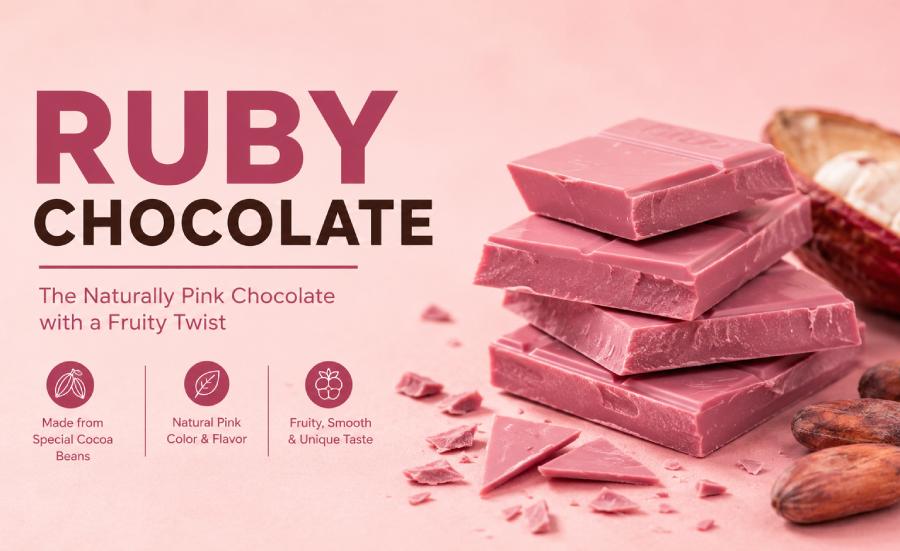
Chocolate has long been divided into three familiar categories: dark chocolate, milk chocolate, and white chocolate. For decades, these varieties dominated store shelves and dessert menus around the world. Then came a surprising newcomer that caught the attention of chocolate lovers, chefs, and food enthusiasts alike—Ruby Chocolate.
Known for its naturally pink color and unique fruity flavor, Ruby Chocolate was introduced as the first major innovation in the chocolate industry in many years. Unlike flavored chocolates that rely on berries or artificial coloring, Ruby Chocolate achieves its distinctive appearance and taste through a specialized cocoa-processing method. Since its launch, it has generated excitement, curiosity, and even debate among consumers and experts.
What Is Ruby Chocolate?
Ruby Chocolate is often described as the fourth type of chocolate, joining dark, milk, and white chocolate as a distinct category. It is recognized for its naturally pink hue and fruity flavor profile that differs significantly from traditional chocolate varieties.
What makes Ruby Chocolate remarkable is that no artificial colors or berry flavorings are added during production. The color and taste come from specially selected cocoa beans and a unique processing technique designed to preserve and enhance certain natural compounds found within the cocoa.
When first introduced, many people assumed the pink appearance came from strawberries, raspberries, or food coloring. However, the chocolate’s color is actually derived from the cocoa beans themselves, making it one of the most unusual innovations in modern chocolate manufacturing.
The History Behind Ruby Chocolate
Ruby Chocolate was officially introduced to the world in 2017 by Barry Callebaut, one of the largest chocolate manufacturers in the world. The company spent more than a decade researching cocoa beans and refining production techniques before unveiling the product.
The launch generated significant media attention because it represented the first major chocolate category to emerge since white chocolate became popular decades earlier. The company described Ruby Chocolate as a completely new sensory experience, offering a balance of sweetness, creaminess, and fruitiness unlike any existing chocolate variety.
Shortly after its introduction, major confectionery brands began experimenting with Ruby Chocolate in bars, truffles, desserts, pastries, and specialty products. Its unique appearance made it particularly attractive for premium and luxury confectionery applications.
How Ruby Chocolate Is Made
The production of Ruby Chocolate begins with carefully selected cocoa beans that contain specific naturally occurring compounds. Unlike traditional chocolate-making processes that heavily emphasize fermentation, Ruby Chocolate production focuses on preserving certain characteristics within the cocoa beans.
The beans undergo a specialized processing method that helps reveal their natural pink-red pigments and fruity flavor notes. This process is considered one of the key innovations behind Ruby Chocolate and remains closely associated with the technology developed by its creators.
After processing, the cocoa components are blended with ingredients commonly found in chocolate, including cocoa butter, milk solids, and sugar. The result is a smooth chocolate product with a naturally pink appearance and a distinctive flavor profile.
Although the exact manufacturing details are proprietary, experts agree that the process is responsible for creating the chocolate’s unique combination of color and taste without relying on artificial additives.
What Does Ruby Chocolate Taste Like?
One of the most interesting aspects of Ruby Chocolate is its flavor. People often expect it to taste like strawberry candy because of its pink color, but the actual experience is quite different.
Ruby Chocolate offers a subtle fruity flavor combined with mild acidity and creamy sweetness. Many people describe tasting hints of berries, citrus, and yogurt-like tanginess. Unlike dark chocolate, it has very little bitterness. Unlike white chocolate, it is less sweet and more complex.
The flavor profile creates a refreshing sensation that stands apart from traditional chocolate products. Instead of delivering intense cocoa richness, Ruby Chocolate focuses on balance and brightness.
This distinctive taste has helped it gain popularity among consumers looking for something different from conventional chocolate options.
Why Is Ruby Chocolate Pink?
The pink color of Ruby Chocolate is perhaps its most famous characteristic. In a market filled with brown, dark brown, and white chocolates, the naturally pink appearance immediately attracts attention.
The color comes from naturally occurring compounds found in specially selected cocoa beans. Through careful processing, these compounds are preserved and transformed in a way that creates the signature rosy appearance.
Unlike many pink confectionery products, Ruby Chocolate does not require artificial coloring agents to achieve its vibrant look. This natural origin is one of the reasons the product has generated so much interest among both consumers and food industry professionals.
Its striking appearance also makes it highly photogenic, contributing to its popularity on social media platforms and in premium dessert presentations.
Nutritional Profile of Ruby Chocolate
From a nutritional standpoint, Ruby Chocolate is relatively similar to milk and white chocolate. It contains sugar, cocoa butter, milk solids, and other ingredients commonly found in chocolate products.
Like other chocolates, Ruby Chocolate provides energy through carbohydrates and fats. It also contains small amounts of minerals naturally present in cocoa. However, it should still be considered a treat rather than a health food.
Compared to dark chocolate, Ruby Chocolate generally contains lower levels of cocoa-derived antioxidants because it includes less cocoa solids. As a result, consumers seeking maximum antioxidant benefits may still prefer dark chocolate varieties.
Nevertheless, Ruby Chocolate can be enjoyed as part of a balanced diet when consumed in moderation.
Popular Uses of Ruby Chocolate
Ruby Chocolate has become a favorite ingredient among pastry chefs, chocolatiers, and dessert creators because of its unique color and flavor.
It is commonly used in truffles, chocolate bars, cakes, cookies, mousses, cheesecakes, and macarons. The pink color instantly enhances visual presentation, making desserts appear more elegant and distinctive.
Many chefs pair Ruby Chocolate with ingredients such as raspberries, strawberries, passion fruit, citrus fruits, almonds, pistachios, and vanilla. These combinations help highlight its naturally fruity notes while maintaining balance.
The chocolate is also used in specialty beverages, including hot chocolate, milkshakes, and dessert-inspired coffee drinks. Its versatility has allowed it to become a valuable addition to modern culinary creativity.
Market Impact and Consumer Reception
When Ruby Chocolate first entered the market, reactions were mixed. Some consumers immediately embraced it as an exciting innovation, while others questioned whether it truly deserved recognition as a new chocolate category.
Despite the skepticism, Ruby Chocolate successfully established itself within the premium confectionery segment. Major brands launched Ruby Chocolate products, and consumers showed strong interest in trying something different from traditional chocolate offerings.
Its appeal has been particularly strong among younger consumers who appreciate visually appealing foods and unique flavor experiences. Social media also played an important role in increasing awareness and encouraging people to try the pink chocolate for themselves.
Today, Ruby Chocolate continues to appear in limited-edition products, luxury gift boxes, and gourmet desserts around the world.
How Ruby Chocolate Compares to Other Chocolate Types
Dark chocolate is known for its rich cocoa flavor and slight bitterness. Milk chocolate offers a smoother and sweeter experience. White chocolate focuses on creaminess and sweetness without cocoa solids.
Ruby Chocolate occupies a unique position between these categories. It provides sweetness similar to milk chocolate, creaminess similar to white chocolate, and a fruity complexity that neither traditional category offers.
Its flavor is lighter and brighter than dark chocolate, making it appealing to consumers who prefer less bitterness. At the same time, its tangy notes help prevent it from becoming overly sweet.
Because of these qualities, Ruby Chocolate has successfully carved out its own identity rather than simply functioning as a novelty product.
The Future of Ruby Chocolate
The future of Ruby Chocolate appears promising as manufacturers continue to experiment with new products and applications. As consumers increasingly seek unique food experiences, Ruby Chocolate offers both visual appeal and flavor innovation.
Research into cocoa processing techniques may lead to further improvements in quality, consistency, and availability. More brands are expected to introduce Ruby Chocolate products, particularly in premium and artisanal markets.
Its growing popularity also highlights a broader trend within the food industry: consumers are becoming more interested in products that offer both novelty and authenticity. Ruby Chocolate satisfies both demands by providing a genuinely different chocolate experience while remaining rooted in cocoa-based ingredients.
FAQs
What is Ruby Chocolate made from?
Ruby Chocolate is made from specially selected cocoa beans that naturally produce a pink color and fruity flavor through a unique processing method.
Why is Ruby Chocolate pink?
Its pink color comes from natural compounds found in cocoa beans. No artificial colors or berry extracts are added.
Does Ruby Chocolate taste like strawberries?
Not exactly. Ruby Chocolate has subtle berry-like and fruity notes, but it does not contain strawberries or strawberry flavoring.
Is Ruby Chocolate healthier than regular chocolate?
Ruby Chocolate is similar to milk and white chocolate in calories and sugar content, so it should be enjoyed as an occasional treat.
Can Ruby Chocolate be used in baking?
Yes, Ruby Chocolate works well in cakes, cookies, mousses, cheesecakes, truffles, and other desserts where its color and flavor can stand out.
Conclusion
Ruby Chocolate represents one of the most significant innovations in the chocolate industry in recent decades. With its naturally pink color, fruity flavor profile, and unique production process, it offers a completely different experience from traditional dark, milk, and white chocolate.
Although opinions about its taste vary, there is no doubt that Ruby Chocolate has successfully captured global attention and expanded the possibilities of modern confectionery. Whether enjoyed in a chocolate bar, a gourmet dessert, or a handcrafted truffle, Ruby Chocolate provides a memorable experience that continues to intrigue chocolate lovers around the world.