
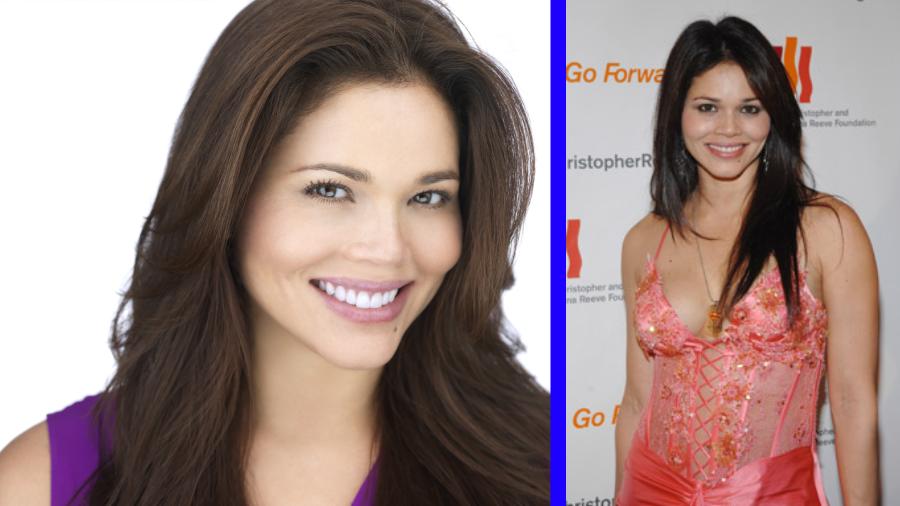
Jennifer Diaz is one of those rare performers who refuses to be boxed into a single lane, and once you start tracing her career, it becomes obvious why. Born and raised in Valencia, Venezuela, and based in the United States for more than two decades, she has built a working life that spans modeling, television hosting, screen acting, theater, and a voice-over career that has quietly reached millions of ears through commercials they probably never realized she was behind. She is the kind of talent the entertainment industry tends to call a “Swiss Army knife” — someone who shows up prepared, switches registers effortlessly, and somehow makes the juggling act look natural. This article digs into her background, her body of work, and what her path says about building a durable creative career in a notoriously fickle business.
From Valencia to the United States
Every interesting career has an origin story, and hers begins in Valencia, Venezuela, a city better known for industry and baseball than for launching international entertainers. Growing up there gave her a cultural foundation that would later become one of her biggest professional assets, particularly in voice work where authenticity of accent and rhythm matters enormously. After spending her formative years in Venezuela, she relocated to the United States and has now lived there for over twenty years, long enough to be considered a genuine Venezuelan-American rather than simply an expat passing through. That bicultural identity is not a footnote in her story; it is the through-line. It shaped the roles she was offered, the markets she could serve, and the unusually wide range of audiences she has been able to connect with across two languages and several cultures. Plenty of performers move countries chasing opportunity, but few manage to turn that relocation into a creative advantage the way she has.
A Law Degree Before the Limelight
Here is the detail that tends to surprise people: before any of the cameras, microphones, or stage lights, she earned a law degree from Universidad Santa María in Venezuela. That is not a typical entry on an actor’s résumé, and it tells you a lot about how she approaches her work. Law school trains a person to read carefully, argue precisely, prepare relentlessly, and stay composed under pressure, and those are exactly the habits that separate working professionals from hopefuls in the entertainment world. It also speaks to a certain fearlessness, because walking away from a respectable, stable profession to chase a creative life takes nerve. You can see the lawyer’s discipline echoed throughout her later career, from the meticulous way voice actors must hit timing and tone to the self-management required to run a freelance career across multiple disciplines. Far from being a detour, that academic background reads like the foundation that made everything else sustainable.
Breaking Into Film and Television
When she turned toward performance, she did not ease in through the side door — she landed work on projects with serious visibility. Her screen credits include Michael Bay’s “Bad Boys II,” one of the loudest, most kinetic action films of its era, as well as the long-running and hugely popular procedural “CSI: Miami.” She has also appeared in the independent project “To Kill a Roach.” Booking parts on a major studio blockbuster and a hit network drama is no small feat, especially for an actor working across languages and balancing several careers at once. These credits matter not just as line items but as proof of range: the world of a glossy, high-octane Hollywood action movie and the world of a forensic crime series demand very different things from a performer. Being trusted on both kinds of sets signals an adaptability that casting directors prize. It is the difference between an actor who can only play one note and one who can be dropped into wildly different productions and deliver.
The Pepsi Chart and Life as a TV Host
Acting is only one slice of her on-camera work. For three seasons, she hosted “The Pepsi Chart, Latin America Edition,” a music program produced by the British powerhouse Endemol UK. If you have never hosted a show, it is easy to underestimate how hard the job actually is. A host has to carry an entire program on personality and pacing, read teleprompters and ad-lib in the same breath, interview guests who may or may not cooperate, keep energy high across long shooting days, and make all of it look spontaneous. Doing that across three seasons of a regional music chart show means she was the consistent, dependable face audiences tuned in for. The role also placed her squarely at the intersection of entertainment and lifestyle branding, hosting a music format tied to one of the most recognizable consumer brands on the planet. It is precisely the kind of high-visibility gig that builds a name across an entire region rather than a single market.
Becoming a Fantana and the L’Oréal Years
Some of her most widely seen work is the kind people absorb without ever learning the performer’s name. She was one of the original Fantanas — the colorful, high-energy faces of the Fanta soda campaign, with her playing the Orange character. That campaign was a genuine pop-culture moment, the sort of advertising that lodges in your head whether you wanted it to or not, and being part of the original lineup put her in front of an enormous mainstream audience. On top of that, her voice has appeared on hundreds of L’Oréal commercials, along with spots for many other brands. Commercial work like this is the unglamorous engine room of the entertainment economy, and it is fiercely competitive precisely because it pays and because so few performers can deliver exactly what a brand wants on demand. Booking a single national campaign is a milestone; voicing hundreds of them across major brands is a career within a career. It is steady, skilled, repeat-business work that only goes to people advertisers trust completely.
The Voice-Over Craft
If there is a discipline where she has truly carved out a specialty, it is voice-over, and it is worth slowing down to appreciate how technical this work really is. She performs in three languages — Spanish, English, and Italian — and works primarily in neutral Latin American Spanish and accented English. Beyond that, she keeps a polished repertoire of regional accents, including Cuban, Dominican, Castilian Spanish, Puerto Rican, Colombian, Venezuelan, Argentine, and Mexican. To a casual listener these might all sound like “Spanish,” but anyone in the industry knows that nailing the distinct music of each region is a specialist skill that takes years to develop and is hard to fake. She also runs a professional home studio, working with Pro Tools and Source Connect, which lets her deliver broadcast-quality audio and collaborate with clients remotely on quick turnaround. That combination — multilingual range, granular accent control, and a self-sufficient technical setup — is exactly what the modern voice-over market demands. It explains why she has been such a reliable hire for brands that need to reach diverse Spanish-speaking audiences without sounding generic.
A Life on the Stage
For all the camera and microphone work, the theater appears to be where her training runs deepest. She studied acting at the Lee Strasberg Theatre and Film Institute in New York City, the famed home of method acting, which gave her a rigorous, emotionally grounded technique to draw from. Onstage she has performed at a long list of respected venues, including Repertorio Español, Teatro Thalia, the HERE Arts Center, Dixon Place, and the Manhattan Theatre Club. She has also held residencies at INTAR’s Theater Unit 52 and took part in the Los Angeles Theatre Center’s Encuentro 2014, a significant national festival of Latino theater. Among her stage credits is “Ladies Room” at Teatro Thalia in New York, where she shared the stage with fellow Venezuelan performers Maria Antonieta Duque and Mimi Lazo. Theater is the discipline that keeps an actor’s instincts sharp, because there is no second take and no editing booth to save a weak moment. The fact that she has kept one foot firmly in the live-performance world, even while building screen and voice careers, says a great deal about her commitment to the craft itself rather than just the paycheck.
Awards and Recognition
Talent and persistence are one thing, but recognition from your peers and from critics is another, and she has collected both. She is a recipient of an ACE Award from the Association of Latin Entertainment Critics of New York, an honor that recognizes excellence within the Latino entertainment community. She has also received a HOLA Award from the Hispanic Organization of Latin Actors, one of the most respected bodies advocating for and celebrating Hispanic performers in the United States. These are not vanity trophies; they are meaningful nods from organizations made up of the very people who understand how difficult this work is and how high the bar should be. Awards like these also reflect something important about her standing within the Latino arts world specifically — she is not simply a working performer but one whose contributions have been singled out by the community she is part of. In an industry where so much labor goes unrecognized, that kind of acknowledgment carries real weight.
A New Chapter in Real Estate
One of the more intriguing turns in her story is that she has, in recent years, channeled her energy into a second professional life in New York City real estate, working as a licensed salesperson as part of The Sharp Team at Corcoran. At first glance this might look like a complete left turn, but look closer and the logic clicks into place. Real estate, especially at the high end of the New York market, is fundamentally about communication, trust, presentation, and the ability to read people — all skills she spent decades sharpening in entertainment. Her legal training resurfaces here too, lending itself naturally to the contracts, negotiations, and fine-print diligence the job demands. Clients have praised her professionalism, thoroughness, and genuine attentiveness, which is more or less what you would expect from someone who has hosted live television and performed unscripted theater. Far from abandoning her past, she seems to be repurposing every skill she ever built. It is a smart, grounded reinvention, and an increasingly common one for creative professionals who want both stability and a new challenge.
What Makes a Multi-Hyphenate Career Work
Step back from the individual credits and a bigger lesson emerges from her career. The performers who last are rarely the ones who bet everything on a single dream role; they are the ones who build a diversified portfolio of skills and stay genuinely good at all of them. She did exactly that, treating modeling, hosting, screen acting, voice-over, and theater not as competing interests but as complementary strengths that fed one another. Her hosting sharpened her on-camera ease, her theater training deepened her acting, her multilingual fluency opened doors in voice work, and her discipline held the whole thing together. Crucially, she also kept reinventing herself as the industry shifted, eventually layering an entirely new profession on top of the creative one. For anyone trying to navigate a modern creative career, that adaptability is the real takeaway. The market changes, technology changes, and tastes change, but a versatile professional who can keep learning and pivoting tends to find a way to keep working. Her path is a quiet, practical case study in exactly how that is done.
FAQs
Who is Jennifer Diaz?
She is a Venezuelan-American performer, born and raised in Valencia, Venezuela, who has worked as a model, TV host, actor, and voice-over talent for over two decades. More recently she has also become a licensed real estate salesperson in New York City.
What is Jennifer Diaz known for?
She is known for appearing in “Bad Boys II” and “CSI: Miami,” hosting “The Pepsi Chart, Latin America Edition,” and being one of the original Fantanas. She is also a prolific voice-over artist heard on hundreds of L’Oréal commercials.
What languages does Jennifer Diaz speak?
She performs professionally in Spanish, English, and Italian. In her voice work she also commands a wide range of regional Spanish accents, from Cuban and Dominican to Argentine and Mexican.
Did Jennifer Diaz study acting formally?
Yes, she trained at the Lee Strasberg Theatre and Film Institute in New York City. Before pursuing entertainment, she also earned a law degree from Universidad Santa María in Venezuela.
What is Jennifer Diaz doing now?
Alongside her entertainment background, she now works in New York City real estate as a licensed salesperson with The Sharp Team at Corcoran. She continues to apply her communication and negotiation skills in this new field.
Conclusion
Jennifer Diaz’s career is a reminder that the most interesting professional lives rarely follow a straight line. She moved from a law degree in Venezuela to studio films, hit television, regional hosting, iconic ad campaigns, a deep voice-over specialty, award-winning theater work, and now a thriving second act in real estate, and she made each chapter build on the last. What ties it all together is not luck but range, discipline, and a willingness to keep reinventing herself as the world around her changed. Whether you came across her as the Orange Fantana, heard her voice on a commercial without knowing it, watched her host a music show, or worked with her on a New York apartment hunt, you encountered the same thing: a prepared, versatile professional who treats every role as worth doing well. In an industry that chews up specialists and rewards the adaptable, her story is both an enjoyable one to follow and a genuinely useful one to learn from.