
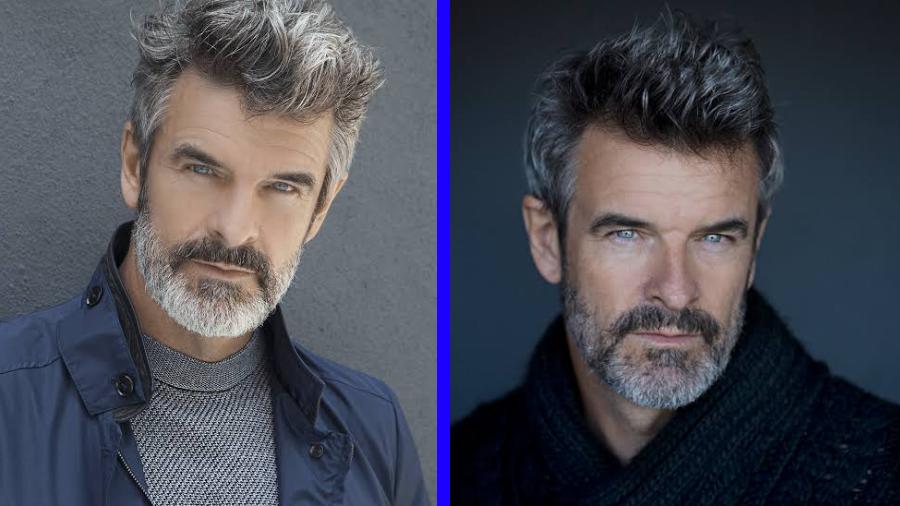
Every so often you come across an actor whose story reads less like a Hollywood fairy tale and more like a slow, deliberate apprenticeship. Michael Dale is one of those people. He is a London-born, Brooklyn-based actor who crossed the Atlantic in the early 1990s and went on to train under some of the most respected names in American acting instruction. What makes him interesting is not a single breakout role or a viral moment, but the quiet seriousness with which he approached the craft itself. In a profession that often rewards luck and timing, Dale represents the type of performer who put in the unglamorous hours, studied with the masters, and built a foundation that still holds up today.
Who Is Michael Dale?
Michael Dale is a British actor who has spent the better part of three decades living and working in the United States, primarily in New York. He is best known to film and television audiences for appearing in projects such as Prince Harming, Black Site Delta, and the long-running USA Network series Burn Notice. But to reduce him to a short list of credits would miss the point entirely. Dale belongs to a particular tradition of actor, the kind who treats performance as a lifelong study rather than a quick route to fame. He came up through the studio system in New York, learning from teachers whose names carry real weight in theatrical circles, and he carried that grounding into everything he did on screen. If you have watched him work, you have probably noticed a certain steadiness, an actor who seems comfortable inhabiting a character rather than performing one. That comfort did not appear out of nowhere. It was earned.
Born and Raised in London
Before there was a New York acting career, there was a kid growing up in London, England. Dale was born and raised in the British capital, and like a lot of performers who emerge from that city, he carried with him the cultural texture of a place that takes its theatre seriously. London is a city where stage acting is woven into the fabric of public life, where the West End sits alongside fringe venues and where the line between high art and popular entertainment has always been a little blurry. Growing up in that environment tends to leave a mark, and it is fair to say that the early years in England shaped his instincts long before he ever set foot in a formal classroom. There is something distinctly British about the way many actors from that background approach text, a respect for language and a willingness to do the homework, and Dale fits comfortably within that lineage.
The 1992 Move to America
In 1992, Michael Dale made the decision that would define the rest of his professional life. He left London and came to the United States. Moving across an ocean to chase a career in acting is not a small thing, and anyone who has done it will tell you that the romance of the idea fades pretty quickly once you are actually living it. You arrive somewhere new, you do not know the casting landscape, you have to build relationships from scratch, and you have to prove yourself all over again to people who have never heard of you. Dale made that leap during a period when New York was still very much the proving ground for serious actors, a place where you could find genuine training and genuine work if you were willing to grind for it. That timing matters. The early nineties New York theatre and film scene rewarded people who showed up, did the work, and stuck around long enough to become known quantities, and that is exactly the path he chose.
Studying With Uta Hagen at HB Studio
Here is where the story gets genuinely impressive. After arriving in the States, Dale studied with Uta Hagen at the legendary HB Studio in New York. If that name does not immediately ring a bell, let me put it in context. Uta Hagen was one of the most influential acting teachers of the twentieth century, full stop. She was a celebrated stage actress in her own right, famous for originating the role of Martha in the original Broadway production of Who’s Afraid of Virginia Woolf?, and she went on to write two acting texts, Respect for Acting and A Challenge for the Actor, that remain required reading for serious students to this day. She taught at HB Studio for decades, mentoring generations of performers until her death in 2004. To have studied directly with Hagen is something a lot of actors would give an arm for, and the fact that Dale trained under her places him in a direct line of one of the great pedagogical traditions in American theatre. Her approach was rooted in honesty, specificity, and the idea that an actor’s job is to bring genuine human behaviour to the stage rather than to imitate it. That philosophy clearly left an imprint on him.
The Meisner Technique With Robert X. Modica
Studying with Hagen would have been enough for most people, but Dale did not stop there. He went on to train in the Meisner Technique under Robert X. Modica at Carnegie Hall. For those unfamiliar, the Meisner Technique is one of the foundational schools of modern American acting, developed by Sanford Meisner and built around a deceptively simple idea: acting is the ability to live truthfully under imaginary circumstances. Meisner’s method is famous for its repetition exercises, which train actors to stop intellectualizing and start genuinely responding to their scene partners in the moment. Robert X. Modica was a respected teacher of this approach, and studying with him meant absorbing a discipline that prizes spontaneity, listening, and emotional availability above all else. What is fascinating about Dale’s training path is that he essentially gave himself two complementary foundations. Hagen’s work gave him structure, craft, and a deep respect for the text, while Meisner gave him the instinctive, in-the-moment responsiveness that makes a performance feel alive. Combining those two traditions is the mark of an actor who was thinking carefully about how he wanted to build his toolkit.
A Surprisingly Athletic and Adventurous Life
One of the more charming things about Michael Dale is that his life has never been confined to the rehearsal room. He is a former ski instructor, which tells you he spent serious time on the slopes and knew the sport well enough to teach it. He was also a semi-professional soccer player, which is no small accomplishment and speaks to a level of athletic discipline that not many actors can claim. On top of that, he has worked as a yoga teacher and is a tango dancer. Put all of that together and you get a picture of a man who has always been physically engaged with the world, someone comfortable in his body and willing to push it in different directions. This matters more than it might seem at first. Physical awareness is a huge part of acting, and performers who come from athletic or movement-based backgrounds often bring a particular ease and presence to the screen. The discipline required to ski well, to compete in soccer, to teach yoga, and to dance tango is the same discipline that shows up in a well-prepared actor. These were not just hobbies; they were part of how he learned to inhabit space and stay present.
On Screen: The Roles That Define His Reputation
When people look Michael Dale up, the credits that surface most often are Prince Harming, Black Site Delta, and Burn Notice. Each of these represents a different corner of the industry. Burn Notice was a hugely popular USA Network series that ran for years and built a loyal audience, and appearing on a show with that kind of reach puts an actor in front of a lot of eyes. Black Site Delta leaned into the action and thriller space, while Prince Harming showed a different tonal register entirely. The variety here is worth noting. Rather than getting boxed into a single type, Dale moved between genres and formats, which is exactly what you would expect from someone with the kind of broad foundational training he received. Working actors rarely have the luxury of choosing only the roles they love, and the ones who last are usually the ones who can adapt, show up prepared, and deliver regardless of the material. Dale’s body of work reflects that adaptability. He is the sort of performer who strengthens a production from the supporting ranks, the kind of reliable presence that directors come to trust.
Building a Life in Brooklyn
Today, Michael Dale calls Brooklyn, New York home, and there is something fitting about that. Brooklyn has long been a magnet for artists, actors, writers, and creative people of every stripe, a borough where the working artist’s life is not only possible but almost expected. Settling there says something about his relationship to the craft. He did not chase the bright lights of Los Angeles and the studio-blockbuster machine; he planted himself in a community where theatre, independent film, and serious creative work continue to thrive. For a lot of New York actors, Brooklyn is more than just an address. It is a statement of values, a commitment to a certain kind of artistic life that prioritizes substance over spectacle. Living there keeps an actor close to the stages, the studios, and the network of fellow artists that make a sustainable career possible. It is the natural endpoint for someone whose whole journey has been about depth rather than flash.
What His Journey Teaches Aspiring Actors
If there is a lesson buried in Michael Dale’s story, it is that there are no real shortcuts in this profession. He did things in an order that makes sense for anyone serious about the craft. He absorbed the culture of a theatre-rich city growing up, he took a genuine risk by relocating to a new country, and then he committed himself to rigorous training under two of the most respected names in American acting instruction. He did not skip the foundational work in the hope of getting discovered overnight. He built his skills brick by brick, and he supplemented his craft with a physically active, curious life that kept him grounded. For aspiring actors, this is the unglamorous truth that nobody wants to hear but everybody should: the work comes first. Talent matters, of course, but talent without training and discipline tends to plateau quickly. Dale’s path is a quiet argument for patience, for study, and for treating acting as a lifelong pursuit rather than a lottery ticket.
The Value of Old-School Training in a Modern Industry
It is worth pausing on just how relevant Dale’s old-school training is in today’s fast-moving entertainment landscape. We live in an era where anyone can record themselves, post a clip, and chase instant visibility. The barriers to getting seen have never been lower, but the barriers to actually being good remain exactly where they have always been. Studying with someone like Uta Hagen or training in the Meisner Technique gives an actor something that no amount of self-tape practice can replicate, a deep, structural understanding of how truthful performance actually works. That foundation is what allows a performer to take direction, to adjust on the fly, to find new layers in a character, and to sustain a career over decades rather than months. Dale embodies the kind of craftsmanship that the industry sometimes forgets to value, and his story is a useful reminder that the fundamentals never go out of style. The tools may change, but the work of becoming a genuinely skilled actor has not changed at all.
FAQs
Who is Michael Dale?
Michael Dale is a London-born actor based in Brooklyn, New York, known for film and television work including Prince Harming, Black Site Delta, and Burn Notice. He came to the United States in 1992 and trained extensively in New York under respected acting teachers, building a career grounded in serious craft rather than overnight fame.
Where did Michael Dale study acting?
He studied with the legendary Uta Hagen at HB Studio in New York, one of the most respected acting schools in the country. He then went on to study the Meisner Technique under Robert X. Modica at Carnegie Hall, giving him two complementary foundations in modern American acting instruction.
What is Michael Dale known for?
He is best known for his roles in Prince Harming, Black Site Delta, and the popular USA Network series Burn Notice. His work spans several genres, reflecting the kind of versatility that comes from a strong and varied training background.
What does Michael Dale do besides acting?
Beyond performing, he has lived a remarkably active life. He is a former ski instructor and a former semi-professional soccer player, and he has also worked as a yoga teacher and is a tango dancer. These pursuits speak to a strong sense of physical discipline that complements his acting.
Where does Michael Dale live now?
He currently resides in Brooklyn, New York, a borough long associated with working artists and a thriving creative community. Settling there reflects his commitment to a serious, sustainable artistic life rooted in theatre and independent work.
Conclusion
Michael Dale’s story is not the kind that gets turned into a flashy documentary, and that is precisely what makes it worth telling. He is a working actor in the truest sense, someone who left London for America, sought out the best teachers he could find, and committed himself to the long, patient work of mastering his craft. His training under Uta Hagen and Robert X. Modica places him in a meaningful lineage of American acting, and his roles in Prince Harming, Black Site Delta, and Burn Notice show an artist who can adapt and deliver across a range of material. Add to that a life filled with skiing, soccer, yoga, and tango, and you get a fuller picture of a curious, disciplined, and grounded individual. For anyone interested in what it actually takes to build a real acting career, his path offers a refreshingly honest blueprint: do the work, respect the craft, stay curious, and keep showing up. That is the kind of approach that never goes out of style.