
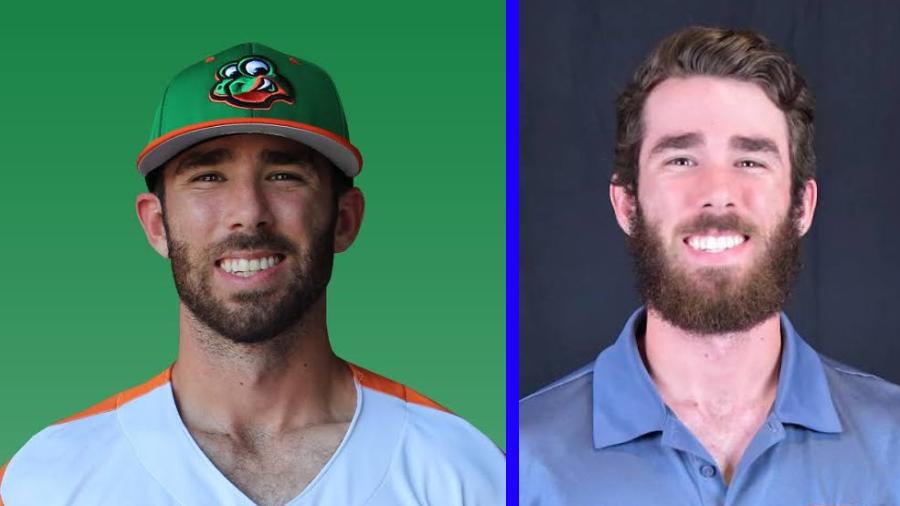
If you’ve spent any time around baseball content online over the last few years, there’s a decent chance you’ve watched Austin Shumaker crouch behind the plate and frame a pitch you didn’t even realize was a ball. He’s part of a newer breed of ballplayer: someone who grinds through the unglamorous, under-the-radar tiers of professional baseball while quietly building a real audience by letting people see what that life actually looks like. He’s not a household name in the Major League sense, and he’d probably be the first to tell you that. But his story — junior college, NAIA ball, independent leagues, a camera, and a whole lot of stubbornness — is a genuinely modern baseball journey, and it’s worth telling properly.
Who Is Austin Shumaker?
Austin Shumaker is an American professional baseball player and content creator, best known as a catcher (he also plays some first base) who has spent his career in independent and MLB partner leagues rather than the affiliated minor league system. Born on March 18, 1997, he’s a left-handed hitter who throws right-handed and is listed at around six-foot-two and roughly 190 pounds. What sets him apart from the thousands of other talented players grinding away at the same level is the platform he’s built around it — he’s racked up a sizable social media following by documenting drills, catching reps, and the day-to-day reality of chasing the game. In other words, he’s a ballplayer first and a creator second, and the two halves feed each other in a way that’s become increasingly common in baseball’s content era.
Roots in Chandler, Arizona
Shumaker comes from Chandler, Arizona, a baseball-rich pocket of the Phoenix metro area that has quietly produced a steady stream of college and pro talent over the years. Arizona is one of those states where you can play organized ball pretty much year-round, and that kind of environment tends to forge players who get a lot of reps early and learn the game at a high level before they ever leave home. He attended Chandler High School before moving on to the college ranks, and his Arizona roots have stayed central to his identity — even as his playing career carried him across multiple states and leagues, the Chandler connection keeps showing up in his bios and his story. For a position as demanding and detail-heavy as catching, getting that early volume of innings in a competitive desert baseball scene was almost certainly an advantage.
The Junior College Path
Plenty of pro careers run straight from a powerhouse high school program to a Division I scholarship, but Shumaker’s route was the grittier, more common version — the one most players actually live. His college path included time at Chandler-Gilbert Community College, the kind of junior college program that serves as a proving ground for players who need more reps, more development, or simply more time to show what they can do. JUCO baseball gets overlooked, but it’s one of the most competitive and unforgiving levels in the sport. Rosters churn constantly, playing time is never guaranteed, and you’re surrounded by other hungry players who are all trying to earn that next opportunity. Coming through that environment as a catcher — a position that demands you handle a pitching staff, control the running game, and produce at the plate — says a lot about a player’s work ethic and baseball IQ. It’s not the glamorous road, but it builds the kind of toughness that shows up later.
College Baseball: Ottawa University and Pittsburg State
From the junior college level, Shumaker continued his college career at four-year schools, with his record reflecting time tied to Ottawa University Arizona (an NAIA program based in Surprise, Arizona) and Pittsburg State University in Kansas. NAIA and Division II baseball don’t get the television coverage their Division I cousins enjoy, but make no mistake — the talent at these levels is real, and plenty of pros have come up through exactly this kind of program. For a catcher, these are the years where the position really starts to click: you’re catching better arms, calling more sophisticated games, and being asked to be a leader on the field in a way that goes well beyond raw athleticism. Studying exercise science along the way fit the profile of a player who clearly thinks deeply about the physical side of the game, and that academic background has obvious overlap with how he’d later approach training, development, and instruction. By the time he wrapped up his college eligibility, he had the resume of a player who’d earned every rung he climbed.
Turning Pro in Independent and Partner Leagues
Here’s where Shumaker’s story gets especially relatable to anyone who loves the game beyond the big-league spotlight. Rather than landing in an affiliated minor league system tied to an MLB club, he carved out his professional career in independent and partner leagues — circuits that operate outside the official farm system but still feature legitimate professional competition. He fulfilled what he’s described as a childhood dream by signing to play professionally, suiting up for teams across these leagues, including stops connected to the United Shore Professional Baseball League (an MLB partner league) and the Pioneer League, another MLB-affiliated partner circuit. Independent ball is its own world: smaller budgets, longer bus rides, modest paychecks, and a roster of players who are all there for one reason — they refuse to be done with the game. It’s a level where you have to genuinely love baseball to survive it, because nothing about it is easy or guaranteed. The fact that Shumaker kept showing up, season after season, tells you everything about how much the game means to him.
Life Behind the Plate
Catching is the hardest job on a baseball field, full stop. It’s the only position where you’re involved in literally every pitch, squatting and standing hundreds of times a game while managing a pitching staff, blocking balls in the dirt, framing borderline strikes, and trying to gun down runners — all while still being expected to hit. Shumaker has built his professional identity around exactly this skill set, and his self-described offensive production in the Pioneer League (he’s cited a two-season stretch with a batting average around .350 and an on-base percentage in the .440s) points to a catcher who can swing it, not just defend. As a left-handed bat behind the plate, he offers a slightly less common profile, and his versatility to slide over to first base adds the kind of lineup flexibility that managers at every level appreciate. The catcher’s mask hides a lot of unglamorous, thankless work, and Shumaker has spent years doing it well enough to keep earning his spot.
Building a Brand: The Content Creator Side
This is the part of Shumaker’s story that feels distinctly of-the-moment. While he was grinding through independent ball, he was also building a substantial following on social media by giving fans a window into a level of baseball most people never get to see up close. On Instagram he’s drawn a large audience that follows his playing schedule, his training, and the lifestyle of a working professional ballplayer, and he’s extended that into video content showing things like high-velocity bullpen sessions from a catcher’s point of view. There’s a real skill to this that often gets underestimated. Turning the daily reality of indy ball into content that people actually want to watch requires a sense for what’s interesting, a willingness to be visible, and the consistency to keep producing. Shumaker figured out that the catcher’s POV — a vantage point fans almost never get — was inherently compelling, and he leaned into it. In doing so he became part of a generation of players who don’t have to wait for the major leagues to build a connection with an audience; they can build it themselves, one clip at a time.
Coaching, Instruction, and Giving Back
The natural next step for a thoughtful, experience-rich player is teaching, and Shumaker has moved in that direction too. He’s worked as a player-coach and offered baseball instruction, positioning himself as someone who can pass along what he’s learned to the next wave of players coming up through the same grind he went through. His coaching philosophy, as he’s framed it publicly, leans on a few clear pillars: translating complex data and information into simple, usable cues that a player can actually apply in the moment; emphasizing preparation and non-negotiable fundamentals; and focusing on development with an eye toward preparing athletes for the highest level they can reach. That exercise science background pays off here, giving him a foundation to talk about the physical and mechanical side of the game with some real credibility. For young catchers especially, learning from someone who has actually lived the position at a professional level — and who can break it down in plain language — is the kind of resource that’s genuinely hard to find.
Why His Story Resonates
What makes Austin Shumaker worth paying attention to isn’t a flashy stat line or a famous last name — it’s the authenticity of the path. He represents the enormous, mostly invisible population of pro baseball: the players who are good enough to get paid to play but who live and work far from the bright lights of the big leagues. By documenting that journey honestly, he’s pulled back the curtain on a part of the sport that fans rarely see, and he’s done it without pretending to be something he’s not. There’s something refreshing about a player who treats both the grind and the camera with the same straightforwardness. His career is a reminder that the dream of professional baseball doesn’t only live in major league stadiums — it lives in junior college dugouts, NAIA road trips, independent league bus rides, and the steady, unglamorous work of a catcher who simply won’t quit. For anyone chasing a goal that the world tells them is a long shot, that’s a story worth knowing.
FAQs
Who is Austin Shumaker the baseball player?
Austin Shumaker is an American professional baseball catcher and first baseman, born March 18, 1997, who hails from Chandler, Arizona. He’s known for playing in independent and MLB partner leagues and for building a large social media following by sharing content from a catcher’s perspective.
What position does Austin Shumaker play?
He’s primarily a catcher, which is the most demanding defensive position in baseball, and he also plays some first base. He bats left-handed and throws right-handed, and his versatility behind the plate and at first gives teams useful lineup flexibility.
Where did Austin Shumaker go to college?
His college baseball path ran through multiple programs, including Chandler-Gilbert Community College in Arizona, Ottawa University Arizona (an NAIA school in Surprise, Arizona), and Pittsburg State University in Kansas. He studied exercise science, which connects naturally to his later work in training and instruction.
What leagues has Austin Shumaker played in?
Rather than the affiliated minor league system, he’s built his pro career in independent and MLB partner leagues, with stops connected to circuits like the United Shore Professional Baseball League and the Pioneer League. These leagues feature legitimate professional competition outside of MLB’s official farm system.
Why is Austin Shumaker popular on social media?
He’s grown a large following by documenting the day-to-day reality of professional baseball at a level most fans never see, including catcher’s-POV videos of high-velocity bullpen sessions and training content. He’s part of a newer generation of players who build a direct connection with fans through their own content rather than waiting for the major league spotlight.
Conclusion
Austin Shumaker’s career is a clear-eyed look at what chasing professional baseball actually looks like for the vast majority of people who do it. From his roots in Chandler, Arizona, through the junior college grind, NAIA and Division II ball, and years of independent and partner-league play, he’s followed the unglamorous road and made something genuine out of it — both on the field as a hardworking, left-handed-hitting catcher and off it as a content creator and instructor who gives fans and young players a window they wouldn’t otherwise have. He’s proof that a meaningful baseball life can be built well outside the major league spotlight, and that authenticity, persistence, and a willingness to do the thankless work can add up to a story worth telling. Whether you found him through a framing clip, a catcher’s-POV video, or just a curiosity about the game’s hidden corners, Shumaker’s journey is a reminder that the love of baseball is what keeps the whole thing turning.