
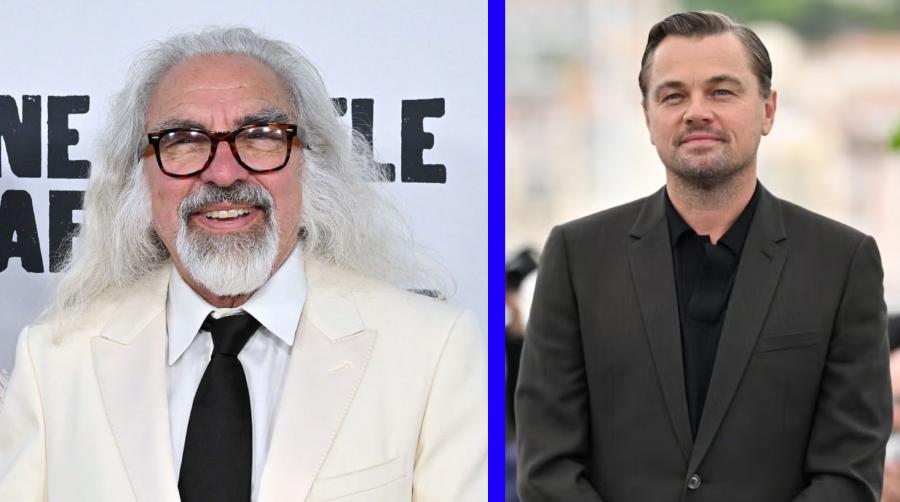
George DiCaprio is not the name that appears on movie posters, but make no mistake — without him, Hollywood’s most celebrated actor might never have existed, at least not in the form we know today. As the father of Leonardo DiCaprio and a genuinely fascinating figure in his own right, George Paul DiCaprio carved out a life that was equal parts bohemian, creative, and deeply influential. He was a writer, editor, publisher, distributor, and underground comix pioneer who operated in the shadowy corners of American counterculture long before his son’s face graced the cover of every magazine on the planet. This is the story of the man behind the legend — and a legend in his own right.
Who Is George DiCaprio?
George Paul DiCaprio was born on October 2, 1943, in New York City. His roots are a genuine cultural blend — his father, George Leon DiCaprio, was the son of Italian immigrants, specifically Salvatore Di Caprio and Rosina Cassella, while his mother, Olga Anne Jacobs, was of German descent. Growing up in mid-century New York with that kind of layered background, it’s no surprise that George eventually gravitated toward the arts. He wasn’t wired for a conventional nine-to-five. He was the kind of person who looked at the mainstream and decided to go sideways instead.
Long before he became known as Leonardo DiCaprio’s father, George was building a reputation in one of the most unconventional creative spaces in American publishing: underground comix. These weren’t the superhero comics your neighborhood newsstand stocked. Underground comix were raw, political, often provocative, and deliberately countercultural — and George DiCaprio was right in the thick of it.
George DiCaprio and the Underground Comix Scene
If you’re not familiar with underground comix, think of it as the punk rock of the publishing world. It emerged in the late 1960s and ran hot through the 1970s, fueled by artists and writers who were fed up with the sanitized content of mainstream comics. George DiCaprio dove headfirst into this world, and he didn’t just dabble — he was fully committed.
His first major work came in 1970 with Baloney Moccasins Comics: A Magazine for the Medieval Mind, a politically charged one-shot publication illustrated by Laurie Anderson — yes, the same Laurie Anderson who would go on to become a celebrated avant-garde performance artist. The book was released through Half-Ass Press, a short-lived self-publishing imprint George ran in partnership with R. Jaccoma, who had both been part of a New York City-based creative firm called Cloud Studios.
From there, George kept building. He launched Greaser Comics in 1971, a title that captured the gritty, irreverent spirit of the era. He co-edited Forbidden Knowledge, a two-issue series published by Last Gasp in 1975 and 1978, which featured work from artists like Robert Williams and Rich Chidlaw. He also had a hand in Cocaine Comix, another Last Gasp publication that ran from 1976 to 1982. These weren’t exactly bedtime reading, but they were important artifacts of a cultural moment when American society was questioning everything — and underground comics were one of the few spaces willing to say the unsayable.
One of his most intellectually ambitious projects was Neurocomics, a 1979 publication that George wrote based on the ideas of Timothy Leary, filtered through the artistic lens of Pete von Sholly. The book tackled Leary’s eight-circuit model of consciousness — a genuinely heady concept — and managed to distill it into 32 pages of illustrated storytelling. Critics noted that while no single comic book could fully convey such a complex philosophical framework, Neurocomics served as a surprisingly accessible primer on the subject. That’s a real skill: taking difficult ideas and making them readable.
George DiCaprio as a Distributor
Beyond writing and editing, George DiCaprio also played a crucial behind-the-scenes role as a distributor. Throughout the 1970s and into the 1980s, he supplied West Coast retailers with underground and independent comics. This was unglamorous work — logistics, relationships, boxes of comics moving across the country — but it was vital to keeping the underground comix ecosystem alive. Without distributors like George, many of these titles never would have reached the readers who needed them. It’s the kind of contribution that rarely makes headlines but matters enormously to a subculture’s survival.
He was deeply embedded in a community of artists and writers that included Harvey Pekar, Robert Crumb, Rick Griffin, Gilbert Shelton, Victor Moscoso, Paul Mavrides, and author Hubert Selby Jr. These were not small names. This was a genuine creative ecosystem, and George DiCaprio was one of its working members.
The Family Behind Leonardo DiCaprio
George DiCaprio met Irmelin Indenbirken while both were in college. Irmelin, who was of German descent, would later become well-known as the devoted mother who accompanied Leonardo DiCaprio to virtually every major awards ceremony throughout his career. The two married and eventually relocated to Los Angeles, where they had their only child together — Leonardo Wilhelm DiCaprio, born November 11, 1974. The story behind the name is one of Hollywood’s favorite fun facts: Irmelin Indenbirken was pregnant and looking at a Leonardo da Vinci painting in a museum in Italy when the baby first kicked. The name was settled on the spot.
The marriage between George and Irmelin didn’t last long after Leonardo’s birth. They separated when Leonardo was about a year old, with George moving on to a relationship with a woman named Peggy Ann Farrar, whom he later married. Through that relationship, he has a stepson, Adam Farrar, who also had a brief acting career in the 1990s. What sets this separation apart from the typical Hollywood divorce story is what the parents chose to do next: rather than putting distance between them, George and Irmelin agreed to live next door to each other so that Leonardo would never be deprived of either parent’s presence. They operated as twin households with a shared garden in the Echo Park neighborhood of Los Angeles — a genuinely unusual and thoughtful arrangement that speaks to both of their characters.
How George Shaped Leonardo DiCaprio’s Career
George DiCaprio’s influence on his son wasn’t just emotional — it was practical and professional. He actively helped shape Leonardo’s early career in concrete ways. George used to screen scripts for his son, helping him filter through material and identify the projects worth pursuing. This was not a passive, hands-off kind of parental support. George was in the trenches with young Leonardo, lending his creative instincts and his knowledge of storytelling to help his son make smart choices.
One of the most specific examples of George’s influence was his role in getting Leonardo cast as Arthur Rimbaud in the 1995 film Total Eclipse. George was instrumental in pushing his son toward that role, recognizing something in the project that matched Leonardo’s emerging abilities. It was an unconventional choice — Rimbaud was a complex, troubled 19th-century French poet — but the kind of bold, artistic bet that defined George’s own creative philosophy.
Leonardo has never been shy about crediting his father. During his 2016 SAG Awards speech, he thanked his parents directly, calling them out for listening to “an overly ambitious, slightly annoying 13-year-old kid who wanted to go on auditions every day after school.” He also credits George for providing both motivation and guidance on filmmaking throughout his life. When your father is someone who spent decades inside the creative world — writing, editing, publishing, distributing — that kind of guidance carries real weight.
George DiCaprio’s Acting Debut
Most people assume that if there’s any acting talent in the DiCaprio family, it flows entirely to Leonardo. But George DiCaprio surprised everyone in 2021 when he made his own film acting debut at the age of 77. He appeared as Mr. Jack in Paul Thomas Anderson’s critically acclaimed film Licorice Pizza — and in a wonderfully full-circle moment, Leonardo DiCaprio would go on to play the lead role in Anderson’s subsequent film, One Battle After Another. Father and son, both in the filmography of one of America’s most respected directors. That’s not a coincidence — that’s a family that genuinely understands cinema.
Since 2008, George had already been working behind the scenes in film as an executive producer, primarily on documentaries and short films. One of his earlier producing credits was as a co-executive producer on the TV series Greensburg. So the 2021 acting debut wasn’t entirely out of nowhere — George had been steadily finding his footing in the film industry for years.
George DiCaprio’s Bohemian Philosophy
If you want to understand George DiCaprio, you have to understand the word “bohemian.” Leonardo himself used it to describe both of his parents, calling them “bohemian in every sense of the word” and crediting them as “the people I trust the most in the world.” That’s a meaningful description. Bohemian doesn’t just mean artsy — it means a genuine commitment to living outside conventional structures, prioritizing creative expression and intellectual freedom over financial security or social approval.
George embodied that philosophy throughout his life. He ran underground comix operations out of self-publishing imprints with names like Half-Ass Press. He collaborated with Timothy Leary, one of the most controversial intellectuals of the 20th century. He distributed countercultural literature to West Coast retailers at a time when mainstream culture wanted nothing to do with it. And he raised his son in an environment where creativity was the currency that mattered most.
That environment left a mark. Leonardo DiCaprio didn’t grow up in a conventional Hollywood household with industry connections and polished ambitions. He grew up in a household where ideas were taken seriously, where art wasn’t just decoration but a way of engaging with the world. His father’s underground comix collection, his father’s artist friends, his father’s scrappy creative ethic — all of that fed into the performer Leonardo would become.
The Legacy of George Leon DiCaprio and Olga Anne Jacobs
To understand George DiCaprio fully, it helps to look one generation back. His father, George Leon DiCaprio, was the child of Italian immigrants — part of the wave of families who came to America from Southern Italy in the late 19th and early 20th centuries. His mother, Olga Anne Jacobs, carried German heritage. This mix of Italian and German roots gave the family a rich, multicultural foundation that shaped their worldview in ways both obvious and subtle.
The Italian side of the family — specifically Salvatore Di Caprio and Rosina Cassella — arrived in America and built a new life from scratch, the classic immigrant story. That kind of resilience and adaptability runs through the DiCaprio line. George’s willingness to operate outside mainstream structures, to build his own publishing imprints and distribution networks, reflects a certain entrepreneurial independence that you could trace back through that immigrant heritage. You make your own way. You build what you need when what you need doesn’t already exist.
George DiCaprio and Peggy Ann Farrar
After his separation from Irmelin Indenbirken, George DiCaprio built a new life with Peggy Ann Farrar, the woman who would become his second wife. Through their relationship, George gained a stepson, Adam Farrar, who became something of a companion and half-brother figure to young Leonardo. The two boys grew up in adjacent households — Leonardo with Irmelin, Adam with Peggy Ann Farrar and George — and developed a close bond in their early years. Adam Farrar pursued acting in the 1990s, though his career never reached the heights of his famous half-brother’s. The relationship between the two brothers reportedly became strained over the years due to personal difficulties Adam faced, but their early connection was a genuine part of Leonardo’s upbringing.
Peggy Ann Farrar is notably a devout Amritdhari Sikh, which added yet another cultural and spiritual dimension to what was already an exceptionally varied household. George DiCaprio’s world was genuinely eclectic — Italian-American roots, German heritage, underground comix counterculture, and a household with Sikh influences. That’s not a typical upbringing by any measure.
FAQs
What is George DiCaprio famous for?
George DiCaprio is known both as the father of actor Leonardo DiCaprio and as a pioneering figure in the American underground comix scene of the 1970s, where he worked as a writer, editor, publisher, and distributor.
What comics did George DiCaprio write?
George DiCaprio authored and edited several underground comics titles including Greaser Comics, Forbidden Knowledge, Cocaine Comix, and Neurocomics, the latter of which was based on Timothy Leary’s philosophical writings.
Did George DiCaprio ever act in films?
Yes — George DiCaprio made his acting debut in 2021, appearing as Mr. Jack in Paul Thomas Anderson’s film Licorice Pizza at the age of 77.
Who is Leonardo DiCaprio’s mother?
Leonardo DiCaprio’s mother is Irmelin Indenbirken, a German-born woman who worked as a legal secretary and has been a constant presence throughout her son’s career.
How did George DiCaprio influence Leonardo DiCaprio’s career?
George DiCaprio actively screened scripts for Leonardo, provided creative guidance, and was instrumental in helping him secure the role of Arthur Rimbaud in the 1995 film Total Eclipse, directly shaping several key early career decisions.
Conclusion
George DiCaprio is far more than a footnote in his famous son’s biography. He is a genuinely interesting person who lived a genuinely interesting life — one built on countercultural creativity, artistic independence, and a deep commitment to the people and ideas he loved. From the underground comix dens of 1970s Los Angeles to an acting debut at the age of 77, George has always operated on his own terms. His roots in the heritage of George Leon DiCaprio and Olga Anne Jacobs, his creative partnership with the likes of Timothy Leary and Laurie Anderson, his co-parenting arrangement with Irmelin Indenbirken, his blended family life with Peggy Ann Farrar — all of it adds up to a portrait of a man who refused to be ordinary.