
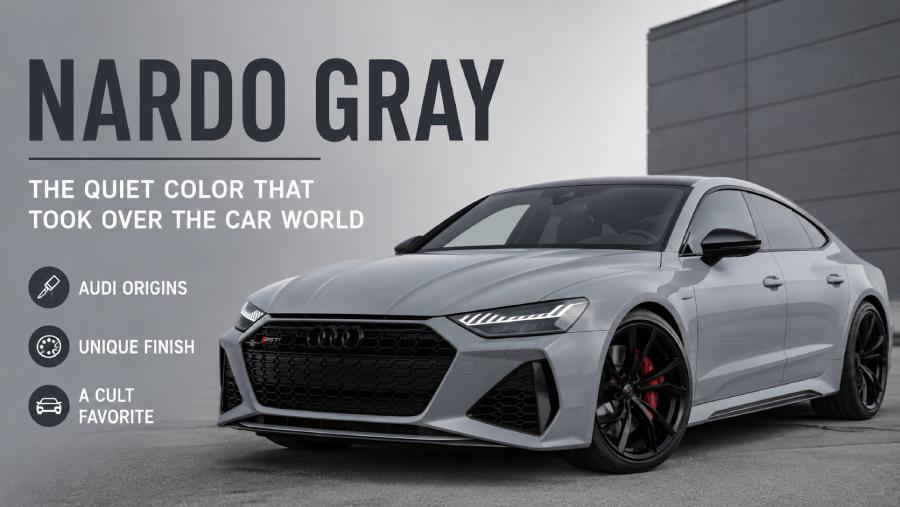
There aren’t many paint colors that earn a fan club, but Nardo Gray pulled it off. It’s the kind of shade that looks understated in a parking lot and somehow magnetic on the move. Ask any car enthusiast about it and you’ll likely get a knowing nod, maybe a story about the first time they saw an Audi RS rolling by in that flat, blue-tinged gray. What started as one of several factory options has grown into a full-blown movement, the sort of color people now chase across brands, paint codes, and vinyl wraps. So let’s get into what makes it tick, where it came from, and why it refuses to fall out of style.
What Exactly Is Nardo Gray?
Nardo Gray is a non-metallic, cool-toned gray paint with subtle blue undertones, originally developed by Audi for its high-performance models. What sets it apart from the dozens of other grays floating around is its lack of metallic flake. Most factory grays lean on tiny aluminum particles to catch the light and add sparkle, but Nardo skips all that. The result is a smooth, even surface where light glides across the panels rather than bouncing off in glittery flecks. It reads almost like a primer or a concept-car finish, which is exactly the raw, industrial vibe that drew people in. It’s a color that feels engineered rather than decorative, and that intentional restraint is a big part of its appeal.
Where the Name Actually Comes From
The name isn’t random marketing fluff, which is half the charm. Nardo Gray takes its name from the Nardò Ring, a legendary high-speed test track tucked away in the Puglia region of southern Italy. The circular track is famous in the automotive world as a place where manufacturers push cars to their absolute limits, chasing top-speed runs and endurance records on its long, banked curves. Naming a color after a proving ground sends a clear message: this isn’t a shade meant for show ponies, it’s meant for machines built to perform. There’s something poetic about a no-nonsense gray borrowing its identity from a place defined by speed and precision rather than glamour. The story gives the color a backbone that flashier paint names simply don’t have.
The Audi Origin Story
Nardo Gray’s rise to fame is tied tightly to Audi, and specifically to one car. In 2013, Audi rolled out the RS7, a sleek new model that combined the body of the A7 with a twin-turbo V8, and it offered buyers a choice of ten colors, including two new shades of gray, Daytona Gray and Nardo Gray. At the time, nobody could have predicted that one of those grays would become a defining look for an entire generation of performance cars. Nardo Grey started life as an exclusive color reserved for Audi’s RS series vehicles, which gave it an air of exclusivity right out of the gate. Being locked to the brand’s hottest models meant that for years, spotting a Nardo Gray Audi was a small event in itself, a signal that you were looking at something special.
Why It Doesn’t Behave Like Other Grays
If you’ve ever wondered why Nardo looks different from your average silver or gunmetal, the answer lives in the paint formula. Audi lists the formula with the code Y7C/5B, and unlike magnetic gray metallic or sterling grey metallic, the blend completely avoids aluminum flake, using black and white tints in a high-solids binder instead. That’s a meaningful technical difference, not just a marketing distinction. Because there’s no sparkle to distract the eye, light rolls evenly across every panel, while a high-gloss clear coat on top adds depth and the base remains calm, accentuating the body lines. In plain terms, the color works with a car’s sculpting rather than fighting it. Sharp creases, muscular fenders, and crisp shoulder lines all get to do their job because there’s no flashy shimmer stealing the spotlight. It’s a gray that flatters good design.
Glossy, Not Flat: Busting the Biggest Myth
Here’s the misconception that trips almost everyone up. People love to call Nardo Gray a “flat” color, and that label is technically wrong. While some refer to it as a flat gray, this is incorrect, because Nardo’s top layer is actually quite glossy, and it’s the blue undertones combined with the glossy finish that give the color its extra something. The confusion comes from how the word “flat” gets thrown around. People frequently use “flat” to describe any non-metallic auto paint, but in reality, flat refers to a specific type of clear coat or protective layer, not the absence of sparkle. So when you see Nardo in person, expect a finish that’s smooth and matte-looking in shadow but genuinely reflective in direct light. That tension between the muted base and the glossy clear coat is exactly what makes it photograph so well and look so deliberate in the metal.
How It Became a Cult Color
A factory paint option doesn’t usually become a cultural touchstone, but Nardo Gray hit at exactly the right moment. As the RS7 and later RS models spread across the world, the color found a second life on social media, where its clean, moody aesthetic was practically built for the platform. It looked phenomenal in photos, held up beautifully under both bright sun and overcast skies, and projected a confident, understated attitude that resonated with a younger, design-savvy crowd. Enthusiasts started seeking it out specifically, dealers noticed the demand, and before long, Nardo Gray became shorthand for a certain kind of tasteful, performance-minded style. It’s the rare case where a color became a genuine selling point, the sort of thing buyers would wait months for rather than settle for an alternative.
Nardo Gray Beyond Audi
What truly cemented Nardo Gray as a phenomenon is that it refused to stay in its lane. Once the look caught on, owners of BMWs, Porsches, Mercedes, and just about every other brand wanted in, and the aftermarket happily obliged. Today you’ll find Nardo-style grays splashed across M3s, M4s, Cayennes, and countless other cars that never offered the shade from the factory. The color jumped the fence from being an Audi signature to becoming a near-universal enthusiast favorite, a default choice for anyone who wants their car to look serious without shouting about it. That crossover appeal is unusual, since most brand-specific colors stay locked to their origins. Nardo broke that mold and became something closer to a shared language among car people, regardless of the badge on the hood.
Wrap vs. Paint: Two Ways to Get the Look
If you’re chasing the Nardo look on a car that didn’t come with it, you’ve basically got two routes: respray it or wrap it, and both have devoted followings. A full vinyl wrap has become wildly popular because it’s reversible, generally cheaper than a quality paint job, and protects the original finish underneath. There’s now a huge range of Nardo gray wrap films available from top vinyl brands, offering that stealthy, polished style on practically any vehicle. Manufacturers make the shade in gloss, satin, and matte variations, so you can dial in exactly the finish you want. A genuine respray, on the other hand, gives you that authentic depth and longevity that hardcore purists prefer, especially when topped with a proper high-gloss clear coat. Neither option is wrong, it really comes down to budget, commitment, and how attached you are to your factory paint.
Can You Spray It Yourself?
For the garage tinkerers out there, Nardo Gray has become surprisingly accessible, and that’s part of why it keeps spreading. One of the appealing things about the formula is that, because it avoids the complexity of metallic flake, custom shops and home painters often find this flat-looking gray easier to tune than something like sterling gray metallic. You can even buy it in spray-can form from automotive paint brands for smaller projects like trim, wheels, or accent panels. That said, “accessible” doesn’t mean “foolproof.” Getting a convincing result still demands glass-smooth prep, meaning you need to block sand your panels to a fine grit, degrease thoroughly, and clean every inch with a tack cloth before laying down your coats. Skip the prep and the color will happily expose every flaw underneath, since there’s no sparkle to hide imperfections. Done right, though, even a home-garage attempt can look shockingly close to the factory version.
Does Nardo Gray Suit Every Car?
This is where opinions get spicy, and honestly, the answer is no, it doesn’t flatter everything equally. Nardo Gray thrives on cars with strong, defined body lines, because the whole point of the color is to let sculpting and shadow do the talking. Put it on a muscular sports sedan or a sharply creased coupe and it looks incredible, almost like the designer’s clay model came to life. Put it on something soft, rounded, or aimed at comfort over aggression, and it can come across as bland or even a little gloomy. The color rewards intentional, athletic design and exposes shapes that lack tension. So before committing, it’s worth honestly assessing whether your car’s silhouette has the kind of edges that Nardo loves to highlight, because the shade is a collaborator, not a savior.
Living With Nardo Gray Day to Day
A practical note that gets glossed over in all the hype: Nardo Gray is a fairly low-maintenance color to own, which is a pleasant surprise given how premium it looks. As a mid-tone gray, it does a decent job of hiding light dust, minor water spots, and the everyday grime that makes black cars look filthy within hours. It won’t show swirl marks as harshly as a dark finish, and it doesn’t broadcast every speck the way bright white can. That said, the glossy clear coat still loves attention, and a proper wash plus the occasional coat of sealant or ceramic protection keeps that depth looking its best. The blue undertones really come alive on a clean, well-maintained surface, so a little care goes a long way toward keeping the color looking like it belongs on a show stand rather than a commuter lot.
Why It Has Staying Power
Plenty of car trends burn bright and fade fast, but Nardo Gray has shown unusual durability, and there’s a logic to that longevity. The color isn’t chasing a fad, it’s leaning on timeless principles, namely restraint, balance, and respect for good design. It pairs effortlessly with black wheels, carbon fiber accents, and chrome-delete treatments, which keeps it endlessly customizable without ever looking dated. It also sits in a sweet spot between flashy and boring, confident enough to stand out but never so loud that it becomes obnoxious. That combination of versatility and good taste is exactly the kind of recipe that ages well. As long as people appreciate clean lines and understated performance, Nardo Gray has a comfortable home in the enthusiast world, and there’s little sign of its popularity cooling off.
FAQs
Is Nardo Gray a flat or glossy paint?
It’s glossy, despite the common belief that it’s flat. The confusion comes from the fact that it has no metallic sparkle, which leads people to assume it’s matte. In reality, the base color sits under a high-gloss clear coat, so it looks smooth and muted in shadow but genuinely reflective in direct sunlight. The “flat” label is a misnomer that stuck.
Is Nardo Gray only available on Audi?
Originally, yes. It debuted as an Audi color tied to the RS performance lineup, which gave it exclusivity early on. Today, though, the look has spread far beyond Audi thanks to the aftermarket, and owners of nearly every brand replicate it through vinyl wraps or custom paint. So while Audi started it, you’ll now see Nardo-style grays on BMWs, Porsches, and plenty of other cars.
Should I wrap or paint my car Nardo Gray?
It depends on your priorities. A wrap is reversible, usually cheaper, and protects the original paint underneath, which makes it great for leased cars or anyone who likes to switch looks. A respray gives more authentic depth and lasts longer, which appeals to purists planning to keep the car for years. Both can look fantastic, so it really comes down to budget and commitment.
Does Nardo Gray hide dirt and scratches well?
Reasonably well, yes. As a mid-tone gray, it conceals light dust, water spots, and minor swirl marks far better than black or bright white finishes. It won’t make a neglected car look spotless, but it’s forgiving enough for daily driving. A regular wash and the occasional protective coating keep the blue undertones and gloss looking their best.
What colors and accents pair best with Nardo Gray?
Black is the classic companion, especially black wheels and chrome-delete trim, which give the car a stealthy, cohesive look. Carbon fiber accents also play beautifully against the cool gray base. Red brake calipers or subtle metallic touches can add a pop of contrast if you want a little more personality. The color is versatile enough to support both a fully blacked-out theme and a more contrast-heavy build.
Conclusion
Nardo Gray is proof that you don’t need bright colors or flashy finishes to make a statement. It’s a shade built on confidence and good taste, born on a high-speed Italian test track and carried into the mainstream by one iconic Audi after another. The magic is in the details: no metallic flake, a glossy clear coat hiding under a muted base, and blue undertones that quietly elevate every body line they touch. Whether you get there through factory paint, a custom respray, or a quality vinyl wrap, the result is the same kind of understated cool that’s become instantly recognizable. It crossed brands, survived trends, and turned ordinary commutes into something that turns heads, all without ever raising its voice. In a world full of attention-grabbing finishes, Nardo Gray wins by keeping things simple and doing it exceptionally well.