
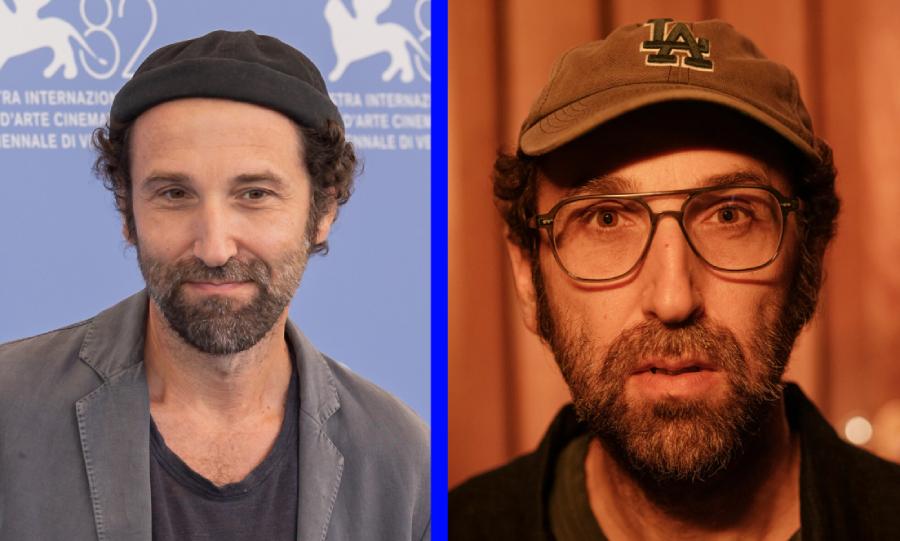
If you have ever nodded your head to “One More Time,” lost yourself in “Get Lucky,” or felt that spine-tingling moment when a gold robot helmet appeared on a giant pyramid of light, then you already know the work of Thomas Bangalter, even if you didn’t know his face. That is sort of the whole point with him. For almost three decades, one of the most influential figures in modern electronic music hid in plain sight behind a mask, letting the music do all the talking. But there is a real person under there, with a fascinating family story, a restless creative streak, and a recent return to the spotlight that has the dance world buzzing all over again.
Who Exactly Is Thomas Bangalter?
Thomas Bangalter was born on January 3, 1975, in Paris, France, and he grew up to become a musician, composer, record producer, songwriter, DJ, and even a film director. Most of the world knows him as one half of Daft Punk, the legendary French house duo he formed with his school friend Guy-Manuel de Homem-Christo. The two of them basically rewrote the rulebook for what electronic music could sound like and, just as importantly, what it could look like. Beyond the duo, Bangalter has worn a lot of hats, from running his own record label to scoring films and even composing for the ballet. He is the rare kind of artist who could have coasted on a single iconic project forever but instead kept reinventing himself, which is exactly why people are still talking about him today.
Growing Up in the Shadow of Daniel Bangalter
You cannot tell the story of Thomas without talking about his father, because frankly, music ran in the family long before Daft Punk existed. Daniel Bangalter, better known by his stage name Daniel Vangarde, was a successful French songwriter and producer who scored a string of hits across the 1970s and 1980s. If you have ever heard “D.I.S.C.O.” by Ottawan or “Cuba” by the Gibson Brothers, you have already heard Daniel Bangalter’s handiwork. He even founded his own label, Zagora, and worked under all sorts of aliases over the years, churning out disco and pop records that defined an era of French dance music.
Here is the interesting part, though. Having a hit-making producer for a dad did not automatically make young Thomas want to follow in his footsteps. In fact, for a long time he actively resisted the idea of a music career, almost as if he wanted to prove he could find his own path rather than ride on his father’s reputation. That tension between honoring his roots and forging his own identity is something you can feel throughout his entire body of work. When Daft Punk eventually leaned hard into disco and funk samples, especially on the album “Random Access Memories,” it was hard not to hear an echo of Daniel Bangalter’s world filtered through his son’s futuristic lens. The student had, in a sense, gone back to study the master, but on his own terms.
It is also worth mentioning that Daniel Bangalter quietly helped the duo in their early days, lending the kind of industry know-how that only a seasoned producer could offer. So even when Thomas was charting his own course, his father was never far from the picture.
Thérèse Thoreux and the Artistic Side of the Family
While Daniel gets a lot of the credit for the family’s musical genes, Thomas’s mother deserves just as much attention. Thérèse Thoreux was a classical dancer and choreographer, which means art and rhythm were baked into both sides of his upbringing. Picture a household where one parent shaped pop hits and the other shaped movement and performance. It is no wonder Thomas ended up with such a strong sense of how music, visuals, and choreography all fit together, something that became a signature of Daft Punk’s stage shows and music videos.
Thérèse Thoreux passed away in 2001, but her influence on her son’s artistic sensibility is undeniable. The fact that Bangalter would later compose an entire ballet score, decades after his childhood spent around dance, feels less like a surprising career swerve and more like a homecoming. When you grow up watching a parent choreograph bodies in space, the leap to writing orchestral music for dancers is not such a leap at all. His parents, by his own admission, were strict about keeping up his piano practice as a kid, and he has since thanked them for it. Turns out the pushy practice sessions paid off rather nicely.
The Daft Punk Years That Changed Everything
Thomas met Guy-Manuel de Homem-Christo at Lycée Carnot in Paris, and the two bonded over a shared love of music. Their first project was actually a guitar-based indie band called Darlin’, which did not exactly set the world on fire. A famously dismissive review described their sound as “daft punky,” and rather than sulk, the pair embraced the insult as a name. That is honestly one of the great origin stories in pop culture, taking a put-down and turning it into a global brand.
Daft Punk officially came together in 1993, and from there the trajectory was extraordinary. Their 1997 debut “Homework” introduced the world to a raw, sample-heavy French house sound, with tracks like “Da Funk” and “Around the World” becoming instant classics. Then came “Discovery” in 2001, a warmer, more melodic record that gave us “One More Time” and “Harder, Better, Faster, Stronger.” The duo wrapped that album in a whole animated film, “Interstella 5555,” proving they were never just about the audio. By the time “Random Access Memories” arrived in 2013, complete with the inescapable single “Get Lucky,” Daft Punk had become a cultural institution, and that album went on to win the Grammy for Album of the Year.
The robots, of course, became as famous as the songs themselves. By hiding behind those sleek helmets, Bangalter and de Homem-Christo flipped the whole celebrity model on its head, letting their personas become timeless icons while their actual faces stayed largely unknown. It was a brilliant bit of mythmaking, and it kept the focus exactly where they wanted it, on the music. The duo announced their split in 2021, ending an era but cementing a legacy that very few artists ever come close to matching.
Life Beyond the Helmet
One thing that has always set Bangalter apart is his refusal to be boxed in. Long before Daft Punk hung up the helmets, he was already exploring side projects and solo ventures. He was part of the trio Stardust, whose single “Music Sounds Better with You” is still one of the most beloved house tracks ever made, and he recorded as part of the duo Together too. He also ran his own label, Roulé, which put out his solo material and records from other artists until it was wound down in 2018.
Then there is his film work, which is genuinely impressive in its own right. He composed the unsettling, churning score for Gaspar Noé’s notorious 2002 film “Irréversible,” a soundtrack that is as physically affecting as the film itself. He has worked as a director and cinematographer, and his fingerprints are all over Daft Punk’s visual output. Perhaps the boldest reinvention came in 2022, when he premiered “Mythologies,” a full ballet score performed by an orchestra and staged with choreography by Angelin Preljocaj. Releasing an orchestral ballet right after stepping away from one of the biggest electronic acts of all time is the kind of move only an artist with nothing left to prove would make. It also closed a lovely loop back to his mother’s world of dance.
Thomas Bangalter Net Worth and Where the Money Comes From
Naturally, a career this big comes with a sizable fortune attached, so let’s talk numbers. The most commonly cited figure for Thomas Bangalter net worth sits at around $90 million, and as of early 2026 he regularly appears on lists of the richest DJs in the world. You will find a few outliers floating around online, with some older estimates landing closer to $70 million and a few newer ones nudging toward $100 million, but the $90 million ballpark is the one most reputable trackers agree on.
So where did all that money come from? The lion’s share is rooted in Daft Punk, between record sales, royalties from a catalog that keeps getting streamed and licensed, and the duo’s hugely lucrative live shows before they retired from touring. On top of that, you have his solo output, his production work, his film scores, and his label income. By most accounts, Bangalter is not the type to flaunt his wealth with flashy displays. The picture that emerges is of someone who funnels his resources into artistic projects and a fairly private life rather than chasing headlines, which honestly tracks perfectly with a guy who spent twenty years refusing to show his face.
Family Life With Élodie Bouchez, Tara-Jay, and Roxan
For a man whose professional life played out on enormous stages, Bangalter has kept his home life remarkably quiet, and that is clearly by design. He is married to the acclaimed French actress Élodie Bouchez, a César Award winner known for films like “The Dreamlife of Angels.” The two have built a partnership that has lasted decades, splitting their time between France and the United States at various points, partly to accommodate Élodie’s acting career and Thomas’s growing interest in filmmaking.
Together they have two sons, Tara-Jay and Roxan, born in 2002 and 2008 respectively. The family has always guarded its privacy fiercely, only occasionally stepping into public view. There is something genuinely sweet about the way Bangalter’s kids have grown up around his music without it being a spectacle. As you will see in a moment, one of those sons recently popped up in a story that melted the hearts of fans everywhere. For someone so associated with anonymity and robotic personas, the warmth of his actual family life is a nice reminder that there is a very human heart beating under all that mythology.
Thomas Bangalter and Fred Again: The Reunion Nobody Saw Coming
Now for the part that has the dance music world completely losing its mind. In 2026, the worlds of Thomas Bangalter and Fred Again collided in the most thrilling way. After years away from DJ booths, Bangalter joined British producer Fred Again for a surprise back-to-back set at Alexandra Palace in London on February 27, closing out Fred’s marathon USB002 residency. This was Bangalter’s first DJ set on UK soil in roughly nineteen years, going all the way back to Daft Punk’s celebrated Alive tour in 2007. You can imagine the reaction in that room.
It was not entirely out of nowhere, mind you. The pair had actually shared a stage once before, at a Paris event near the Centre Pompidou in late 2024 alongside Busy P and Erol Alkan. But the Alexandra Palace show was something else entirely, a two-hour journey weaving Daft Punk classics, Stardust, French touch staples, and modern club cuts into one euphoric blur. Fred later shared the whole set online along with the tracklist, including a heartfelt moment featuring a track Bangalter’s own son had made at just twelve years old. Fred even wrote about the joy of watching Bangalter’s son singing along to every one of his dad’s songs, noting that the boy had been barely a toddler the last time those tracks were played live.
The story got even better afterward. Fred posted screenshots of his messages with Bangalter, who responded with a clip from the film “Casablanca” and its famous line about Paris, widely read as a hint that the two might link up at his Paris studio. Naturally, the internet immediately started speculating about a full studio collaboration, with some reports even suggesting Fred Again could become a touring partner for the Daft Punk legacy. Nothing is confirmed yet, but the chemistry between these two artists from different generations of electronic music is undeniable, and the whole exchange felt refreshingly genuine rather than like a manufactured publicity stunt. Whatever comes next, the Thomas Bangalter and Fred Again connection has reignited a level of excitement around Bangalter that we have not seen since the helmets came off.
Why Thomas Bangalter Still Matters
When you step back and look at the whole arc, what stands out is how consistently Bangalter has refused to do the expected thing. He grew up surrounded by music yet resisted it, then conquered it. He built one of the most recognizable brands in pop culture and then deliberately stayed anonymous behind it. He reached the absolute summit of dance music and then pivoted to orchestral ballet. And just when everyone assumed he had quietly retired from the stage for good, he reemerged for one of the most talked-about DJ sets in recent memory. That kind of unpredictability is rare, and it is exactly why his every move still generates headlines.
He also represents a particular lineage in French music that connects directly back through his father. From Daniel Bangalter’s disco hits to Daft Punk’s robot funk to a son tinkering with tracks at age twelve, there is a thread of creativity running through three generations of this family. Not many artists can claim a story quite that rich.
FAQs
Who is Thomas Bangalter?
Thomas Bangalter is a French musician, composer, and producer, best known as one half of the iconic electronic duo Daft Punk alongside Guy-Manuel de Homem-Christo. He is also the son of hit songwriter Daniel Bangalter.
What is Thomas Bangalter’s net worth?
Thomas Bangalter’s net worth is estimated at around $90 million, earned mainly through Daft Punk’s catalog, royalties, live shows, production work, and film scores. Some estimates range from $70 million to $100 million.
Is Thomas Bangalter married and does he have kids?
Yes, Thomas Bangalter is married to French actress Élodie Bouchez. The couple has two sons, Tara-Jay and Roxan, born in 2002 and 2008, and they keep their family life famously private.
Did Thomas Bangalter perform with Fred Again?
Yes, Thomas Bangalter joined Fred Again for a surprise back-to-back set at London’s Alexandra Palace in early 2026. It marked his first UK DJ appearance in roughly nineteen years and sparked collaboration rumors.
Why did Daft Punk break up?
Daft Punk announced their split in 2021 after nearly three decades together. The duo never gave a detailed reason, but they hinted at retirement and a desire to move on to separate creative projects.
Conclusion
Thomas Bangalter is one of those rare creative forces who managed to become legendary while remaining genuinely mysterious. Born into a household shaped by Daniel Bangalter’s hit records and Thérèse Thoreux’s dance, he absorbed everything around him and then transformed it into something the whole world could feel, even if they never saw his face. Through Daft Punk he reshaped electronic music, through his solo and film work he proved his range, and through his family life with Élodie Bouchez and their sons Tara-Jay and Roxan he showed that a quiet, private existence can coexist with global fame.